A good cover-up is the piece that quietly holds a beach day together. It gets you from the hotel room to the sand, covers your shoulders when the midday sun gets fierce, makes lunch at the beach café feel comfortable, and, if you choose well, carries you straight into an evening drink without a trip back to change.
The trouble is that “cover-up” covers a lot of ground, from a scrap of sheer chiffon to a full linen shirt dress. This guide walks through the main styles, the fabrics that actually work in heat and salt, and how to pick pieces that pull double duty from beach to bar.
Quick takeaways
- Choose your cover-up by where you are going after the beach, not just how it looks on the sand.
- Breathable natural fibres like cotton, linen and rayon blends feel coolest in heat; quick-dry synthetics win when you will be in and out of the water.
- Sarongs and kaftans are the most versatile packing pieces; shirt dresses and wide-leg trousers are the easiest to wear into the evening.
- Sheer and crochet styles look lovely but give little sun protection; pack something more opaque for long midday stretches.
- Check local dress codes: many beach bars, restaurants and town centres expect more than swimwear.
Why a cover-up is worth packing
A cover-up does more work than almost anything else in your beach bag. It gives you a layer of shade between sunscreen applications, it saves your car seat or sun lounger from wet swimwear, and it lets you walk into a shop or café without feeling underdressed.
It also gives you options. If you are travelling light, one well-chosen cover-up can stretch a couple of swimsuits into several different looks. Our beach vacation swimwear packing list treats cover-ups as essentials for exactly that reason.
The main cover-up styles
Sarongs and pareos
A sarong is a simple rectangle of fabric that you tie. That simplicity is its strength: you can wrap it as a long skirt, a short skirt, a halter dress or a strapless dress, and it doubles as a beach blanket, a scarf or a shoulder wrap on a breezy evening. It folds down to almost nothing in a suitcase.
The downside is that knots can slip, especially in slippery fabrics. Look for cotton or rayon that grips itself well, or a sarong with a clip or tie loop.
Kaftans
Kaftans are loose, flowing and forgiving. They slip over your head in a second, skim the body rather than cling, and keep a lot of skin out of the sun. Long kaftans are a natural fit for beach-to-dinner days; shorter tunic-length versions are easier to walk in on sand.
If you like a kaftan’s ease but want a bit of shape, choose one with a drawstring or tie at the waist.
Shirt dresses and oversized shirts
An oversized button-down in linen or cotton is one of the most useful cover-ups there is. Wear it open over a bikini at the beach, buttoned and belted as a dress at lunch, or knotted at the waist over shorts later on. A longer shirt dress does the same job with a little more coverage.
Because they are structured, shirts look intentional in places where a sheer wrap might feel too casual, so they are ideal if your beach day ends in town.
Beach dresses and slip-on dresses
Simple jersey or cotton dresses are the easiest option: pull on, done. Look for styles with a little ease through the body so they do not cling to damp swimwear, and fabrics that do not show water marks easily.
Shorts, skirts and trousers
Sometimes you want to cover your lower half while showing off a bikini top, or vice versa. Wide-leg linen trousers, drawstring shorts and wrap skirts all pair well with swim tops and feel more “outfit” than “beachwear”.
Crochet and sheer cover-ups
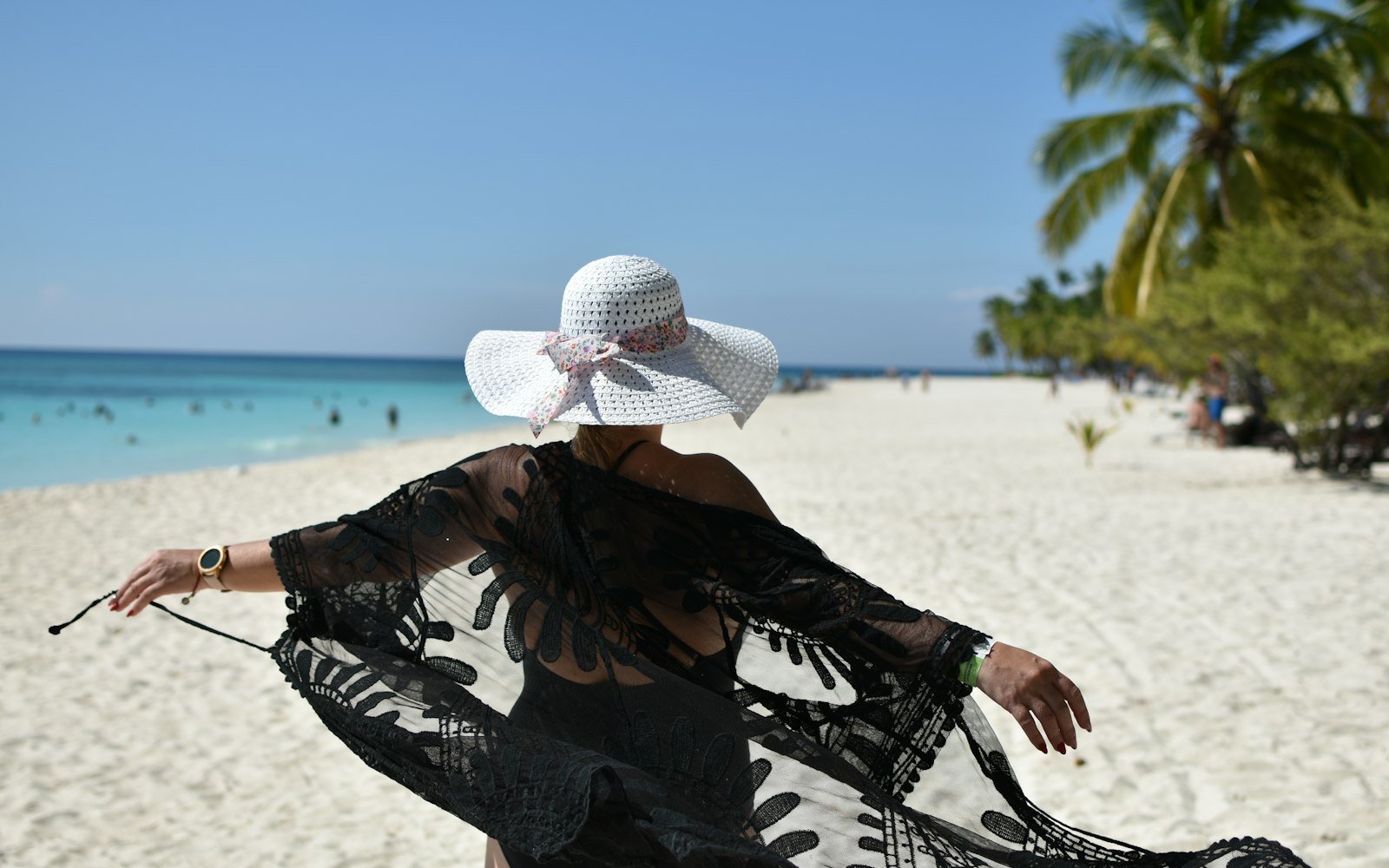
Crochet, mesh and sheer chiffon cover-ups are pretty, light and quick to dry. They are more about style than coverage, though, and they let a lot of sun through. Think of them as the evening-at-the-beach-bar option rather than the midday-shade option.
Choosing the right fabric
Fabric decides whether a cover-up feels like a relief or a sauna. Here is how the common options compare.
| Fabric | Feels in heat | Dries | Best for |
|---|---|---|---|
| Linen | Very cool and airy | Fairly quickly | Shirts, trousers, beach-to-dinner looks |
| Cotton voile or gauze | Light and breathable | Moderate | Kaftans, sarongs, dresses |
| Rayon/viscose | Soft and drapey | Moderate | Sarongs, wrap dresses, flowing kaftans |
| Jersey (cotton or blend) | Comfortable, a little warmer | Slower | Easy slip-on dresses |
| Polyester or nylon chiffon | Light but less breathable | Fast | Sheer wraps, poolside layers |
| Crochet (cotton or synthetic) | Airy | Fast | Style over coverage, evening at the beach |
Linen wrinkles, and that is part of its charm on holiday. If you hate creases, a cotton gauze or a rayon blend will look neater out of a suitcase. Synthetic chiffons dry fastest, which matters if you are swimming repeatedly, but they can feel clammy in humid weather.
Pro tip: Hold a cover-up up to a window before you buy or pack it. If you can clearly see light and shapes through it, it will offer little shade at midday, so plan to pair it with sunscreen or a hat.
Matching your cover-up to your day
Beach only
If you are going straight from your room to the sand and back, comfort and speed matter most. A sarong, a short kaftan or a slip-on dress is all you need. Pick something that does not mind sand and dries quickly if it gets splashed.
Beach to lunch
For lunch at a beach café, add a little more coverage and structure. A longer kaftan, a shirt dress or a wrap skirt over your swimsuit works well. A swimsuit with a simple, clean shape helps here too; a one-piece can pass for a bodysuit under a skirt or trousers. Our guide to one-piece vs bikini vs tankini covers which styles layer most easily.
Beach to bar
This is where cover-ups really earn their place. The easiest beach-to-bar formula is a swimsuit that works as a top, plus a “real” bottom half: linen trousers, a midi skirt or a wrap skirt. Add a light shirt or kaftan you can throw over your shoulders when the evening cools.
Small swaps help: a dry swimsuit (pack a spare), sandals instead of flip-flops, and a scarf or piece of jewellery from your bag.
Boat days and active outings
On a boat or a coastal walk, wind and sun are stronger than you expect. Choose a cover-up that will not blow open: a buttoned shirt, shorts with a drawstring or a wrap with secure ties. If you will be in and out of the water a lot, a rash guard may suit you better.
Respecting local dress codes
In many beach towns, swimwear is for the beach only. Walking through town, into shops or into restaurants in a bikini can be frowned upon, and in some places there are local rules about it. A cover-up that covers your torso and reaches at least mid-thigh is a safe baseline when you leave the sand.
If you are visiting religious sites or more conservative areas, pack something that covers shoulders and knees, such as a long kaftan or a sarong you can wrap as a skirt with a shirt over the top.
Packing and caring for cover-ups
Cover-ups are easy to look after, but salt, sand and sun still take a toll.
- Shake out sand before you pack anything away; it gets into seams and wears fabric over time.
- Rinse cover-ups in fresh water when they have been splashed with salt water or chlorine.
- Hang to dry in the shade; strong sun fades bright colours and prints.
- Roll rather than fold linen and gauze to reduce deep creases in your suitcase.
The same principles that keep your swimsuits going apply here; our swimwear care guide has the full routine.
Building a small cover-up wardrobe
You do not need a different cover-up for every swimsuit. Two or three pieces that cover different situations go a long way:
- One versatile wrap: a sarong or pareo for the beach and as a scarf.
- One easy pull-on: a kaftan or slip dress for quick changes.
- One evening-ready piece: a linen shirt, wide-leg trousers or a midi skirt.
Choose colours that work with most of your swimsuits. Neutrals such as white, sand, black and navy go with almost anything, while one bold print can liven up plain swimwear. If you are coordinating, our guide to swimsuit colours and prints can help you pick a palette.
What to look for when you shop
- Breathable fabric that suits your climate: linen or cotton for dry heat, quick-dry blends for repeat swims.
- Enough opacity for the amount of sun you will be in, or a plan to layer.
- Secure fastenings, such as buttons, ties or clips, that will not slip on a windy day.
- A length that matches where you are going after the beach.
- Easy care: machine-washable or simple to rinse and air-dry.
- Colours that work with at least two or three of your swimsuits.
- A packable shape that rolls small and does not crease badly.
FAQ
What is the most versatile swimsuit cover-up?
A sarong is hard to beat for versatility because it can be tied as a skirt, dress or scarf and doubles as a beach towel. An oversized linen shirt is a close second and looks more polished for lunch or drinks.
Can I wear a cover-up to a restaurant?
Often, yes, as long as it gives reasonable coverage. A shirt dress, a long kaftan or a skirt and top over your swimsuit is usually fine at casual beach restaurants. Check the dress code for smarter places and change out of wet swimwear first.
Do cover-ups protect against the sun?
Some do more than others. Tightly woven, opaque fabrics block more sunlight than sheer or crochet ones. Some cover-ups are made from fabrics with a UPF rating, which indicates UV protection. Either way, keep using sunscreen on exposed skin and reapply as directed.
What should I wear over a wet swimsuit?
Choose a quick-dry fabric or something loose that will not cling and show water marks, such as a gauze kaftan or a chiffon wrap. If you are heading somewhere for a while, changing into a dry swimsuit or underwear is more comfortable.
The right cover-up turns your swimsuit into a full outfit. Start with one wrap, one pull-on and one evening-ready piece, choose fabrics that suit the heat, and you will be ready for wherever the day takes you after the beach.