If you wear a larger cup size, you already know the swimwear problem: a top that looks great on the hanger can feel like it’s doing nothing the moment you walk into the water. Most swimsuits are built on a single “small, medium, large” system that was never designed around bust size, so the support simply isn’t there.
The good news is that swimwear designed for fuller busts has improved a lot, and once you know which construction details carry the weight, shopping gets much easier. This guide walks you through the features that make a real difference, the styles that need more careful fitting, and how to check fit before you commit.
Quick takeaways
- Look for tops sold in band and cup sizes rather than S/M/L. That single change solves most support problems.
- The band does most of the lifting, not the straps. A firm, snug underband is the foundation of a supportive top.
- Underwire, molded or seamed cups, wide straps and adjustable closures all add support. Choose the combination that feels right for you.
- Halter necks can look lovely but put the weight on your neck. Try them before relying on one for a long day.
- Wet fabric stretches, so a top that feels just right when dry may loosen in the water.
Why standard swimwear sizing lets fuller busts down
Most bikini tops are cut for a “typical” ratio between bust and ribcage. If your bust is larger in proportion to your band, a size that fits your ribcage won’t contain your cups, and a size that fits your cups will slide around your back. Neither gives you support.
That’s why the most useful thing you can do is shop for tops sized like a bra: a band measurement plus a cup letter (for example, 34DD or 32F). Many swimwear lines now offer this, often labelled “D+”, “fuller bust” or “cup-sized”. If you’re not sure of your current size, our guide on how to measure yourself for a swimsuit covers how to take band and bust measurements at home.
Pro tip: Your swim size won’t always match your everyday bra size. Swim fabric is stretchier than most bra fabric, so some people go down a band size in swimwear. Check each brand’s size chart rather than assuming.
The support features that actually matter
Support in a swimsuit top comes from a handful of structural elements working together. You don’t need all of them, but the more your top relies on just one, the less secure it will feel.
A firm underband
In bra fitting, the band is often said to provide the majority of support, and the same principle applies to swimwear. A wide, elasticated underband that sits level around your ribcage anchors the whole top. If the band rides up at the back, it’s too loose, and your straps will end up doing work they weren’t built for.
Look for bands that are at least a couple of centimetres wide, with a secure closure. Hook-and-eye or clip fastenings let you adjust the fit, which is helpful because swim fabric relaxes over a day of wear.
Underwire
Underwire does the same job in a swim top as it does in a bra: it shapes each cup, separates, and keeps the fabric from collapsing under weight. Swimwear underwire is usually coated or encased to resist water and chlorine. If you find wire uncomfortable, a well-structured wire-free top with a strong band and seamed cups can still work, especially for lounging.
Molded, seamed or lined cups
There are three common cup constructions, and each has its strengths:
- Molded cups are smooth, pre-shaped foam. They give a rounded shape and a bit of modesty when wet, but they need to match your shape closely or they’ll gape.
- Seamed cups are built from several fabric panels sewn together. They mould to your natural shape and often lift more effectively than a single piece of fabric.
- Lined, unpadded cups use a double layer of fabric for coverage without foam. They’re lighter and dry faster, but offer less structure unless paired with wire.
Wide, adjustable straps
Thin, spaghetti-style straps tend to dig in on fuller busts. Wider straps spread the pressure across your shoulders, and adjustable sliders let you fine-tune the lift. Straps that attach towards the centre of your back, or cross over, also stay on your shoulders better during movement.
Coverage at the sides and centre
A higher side panel (the part of the cup that runs under your arm) helps contain and forward-direct the bust, reducing spillover. A centre gore (the piece between the cups) that sits flat against your sternum is a sign the cups are the right size.
| Feature | What it does | Good for |
|---|---|---|
| Firm underband | Anchors the top and carries most of the weight | Everyone with a fuller bust |
| Underwire | Shapes and separates each cup | All-day wear, lift and definition |
| Seamed cups | Moulds to your natural shape | Natural shaping without foam |
| Molded cups | Smooth, rounded shape and coverage | Modesty when wet, T-shirt-like shape |
| Wide adjustable straps | Spreads pressure across shoulders | Comfort over long days |
| High side panels | Contains the bust at the sides | Reducing spillover and gaping |
Bikini top styles that tend to work well
Every body is different, so treat these as starting points rather than rules. Our guide to bikini top styles goes into each shape in more detail.
Balconette tops
A balconette top has cups cut straight across the upper bust, usually with underwire and straps set wider apart. It lifts from underneath and gives a rounded shape, and it’s one of the most reliable styles for larger cup sizes.
Full-coverage underwire tops
These look much like an everyday full-cup bra. They offer the most containment, which makes them a good choice for swimming, playing with kids, or long days when you don’t want to keep adjusting.
Longline tops
A longline top extends the band further down the ribcage. The extra fabric spreads support over a wider area and helps the top stay in place. Longline styles also give a bit more coverage if that’s what you prefer.
Sporty and crop-style tops
A swim crop or sporty top with a wide band and racerback straps is great for active days. Look for versions sold in cup sizes or with built-in shelf support rather than a simple stretch crop. If you’re planning to surf or swim laps, see our guide to swimwear that stays put.
Styles to approach with care
Some styles can work beautifully on larger busts, but they need more careful fitting.
Halter necks
Halters look great and give a nice lift, but they transfer weight to the back of your neck. On a fuller bust, that can become uncomfortable over a few hours. Converting halters (with straps that can also be worn straight) give you the option to switch.
Triangle tops
Classic string triangle tops rarely offer much support for larger cups because they rely on thin ties and have no band. Some brands make cup-sized triangles with a firmer band, which are a much better option if you love the look.
Bandeaus
Strapless bandeaus depend entirely on the band’s grip. For fuller busts they tend to slip, especially in the water. If you want one for sunbathing, look for a version with boning, a silicone grip strip, an underwire and a detachable strap.
One-pieces and tankinis for fuller busts
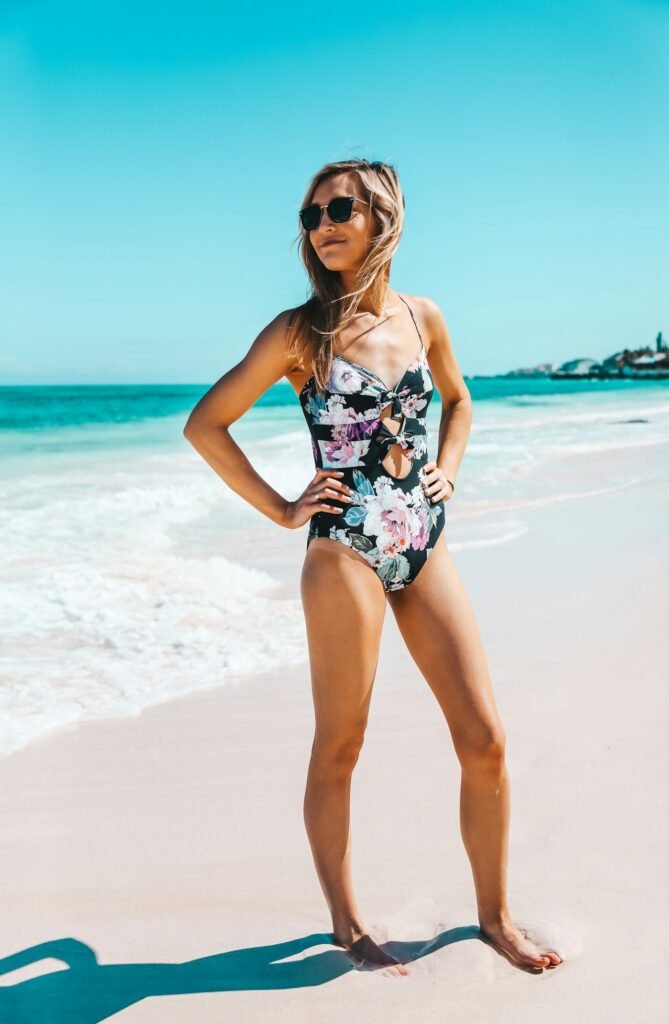
Bikinis aren’t the only option. One-piece swimsuits and tankinis are often available with the same underwire, shelf-bra and cup-sized features, and some people find the full-length construction gives extra stability. A one-piece with a built-in, cup-sized bra combines the support of a bikini top with the security of a single garment.
If you’re weighing up which silhouette suits your plans, our comparison of one-pieces, bikinis and tankinis can help you decide.
Mixing sizes top and bottom
If your bust and hips are in different size ranges, buying a matching set in one size rarely works. Look for brands that sell tops and bottoms separately, so you can buy a top in your band and cup size and bottoms in your hip size. This is one of the simplest ways to get a set that fits everywhere.
How to check the fit at home
When your swimsuit arrives, try it on before removing any tags and run through these checks:
- The band should sit level and feel snug but not tight. You should be able to slide two fingers underneath it.
- The cups should contain your bust with no spillover at the top or sides and no gaping.
- The centre should lie flat against your chest if the top has a centre gore.
- The straps should stay put without digging in. If they’re doing most of the work, the band may be too loose.
- Movement test: raise your arms, bend forward, twist and gently jump. The top should stay in place.
Pro tip: Remember that most swim fabrics relax when wet. If you’re between two band sizes and the tighter one is comfortable dry, it will often be the better choice in the water.
Caring for supportive swimwear
Structured swim tops last longer with a bit of care. Rinse in cool fresh water after each wear, wash by hand, and dry flat in the shade so molded cups keep their shape and underwire casings aren’t stressed. Avoid wringing. Chlorine, sun and heat are what wear down elastic over time, so a little care goes a long way.
FAQ
Should I buy my bra size in swimwear?
Your bra size is a good starting point, but swimwear is often cut and sized a little differently. Check the brand’s size chart and measure yourself. Some people find they need a smaller band in swimwear because the fabric stretches.
Are underwire bikinis comfortable for swimming?
Many people find a well-fitted underwire top perfectly comfortable in the water. Discomfort is usually a sign that the cup or band size is off, so it’s worth trying a different size before giving up on wire.
Do padded cups add support?
Padding adds shape and coverage, but support comes mostly from the band, wire and cup structure. A molded cup without a strong band won’t feel secure on its own.
What can I wear for active swimming with a larger bust?
Look for sporty styles sold in cup sizes, with a wide underband, racerback or crossback straps and full coverage. A supportive one-piece with a built-in bra is also a good option for laps or water sports.
Finding your fit
Shopping for swimwear with a fuller bust is mostly about knowing what to look for: cup sizing, a firm band and structure that suits the way you’ll spend your day. Once you’ve found a top that fits, note the brand’s sizing so you can shop with confidence next season.