There’s a big difference between a swimsuit that looks great on a sun lounger and one that survives a wipeout, a flip turn or a dive for a volleyball. If you’ve ever spent a surf session adjusting your top or climbed out of the pool tugging at your bottoms, you know how quickly the wrong suit can pull you out of the moment.
The good news: suits that stay put share a handful of recognizable features. Once you know what to look for, you can shop for active swimwear with confidence, whether you’re surfing, swimming laps, paddleboarding or playing beach sports.
Quick takeaways
- A snug fit is the foundation of a suit that stays put; active swimwear should feel slightly firmer than lounging swimwear.
- Look for wider straps, racerback or cross-back designs, and secure closures instead of ties.
- Bottoms with moderate coverage, wider side panels and firm elastic hold better than string or very cheeky cuts.
- Polyester-rich and chlorine-resistant fabrics suit frequent pool swimmers.
- Always do a movement test before you commit: jump, squat, reach and twist.
What makes a swimsuit stay put
Every active swimsuit, whether it’s a one-piece, bikini or tankini, relies on the same principles. Understanding them makes it much easier to judge a suit from a product page or a changing room.
A snug, not tight, fit
Swimwear fabric relaxes slightly when wet, and moving water pulls at anything loose. A suit for active use should feel firm and close to your body when dry, without digging in or restricting your breathing. If you’re between sizes and planning to swim hard, the smaller size is often the better choice, as long as it’s comfortable across the shoulders and doesn’t leave deep marks. Getting your measurements right is the first step, and our guide on how to measure for a swimsuit shows you how.
Straps that anchor
Thin straps that sit at the edge of your shoulders are prone to slipping. For active days, look for:
- Racerback and cross-back designs, which pull the straps toward the center of your back so they can’t slide off.
- Wider straps, which spread pressure and stay put better than spaghetti straps.
- Adjustable straps, so you can fine-tune the fit, especially if you have a longer or shorter torso.
Closures you can trust
Tie-backs and halter ties look lovely but can loosen with repeated movement and water. Hook, clasp or buckle back closures stay secure, and pull-on styles with no closure at all remove the risk completely. If you love a tie detail, a double knot helps, but a fixed closure is more dependable for sport.
Coverage in the right places
Very small bottoms and minimal tops have less fabric to grip, so they’re more likely to shift. Moderate or full coverage bottoms, wider side panels and tops with a higher neckline tend to stay in place better. That doesn’t mean active swimwear has to be frumpy; plenty of sporty cuts are sleek and stylish. For a full rundown of shapes, see our guide to bikini top styles.
Surfing and bodyboarding
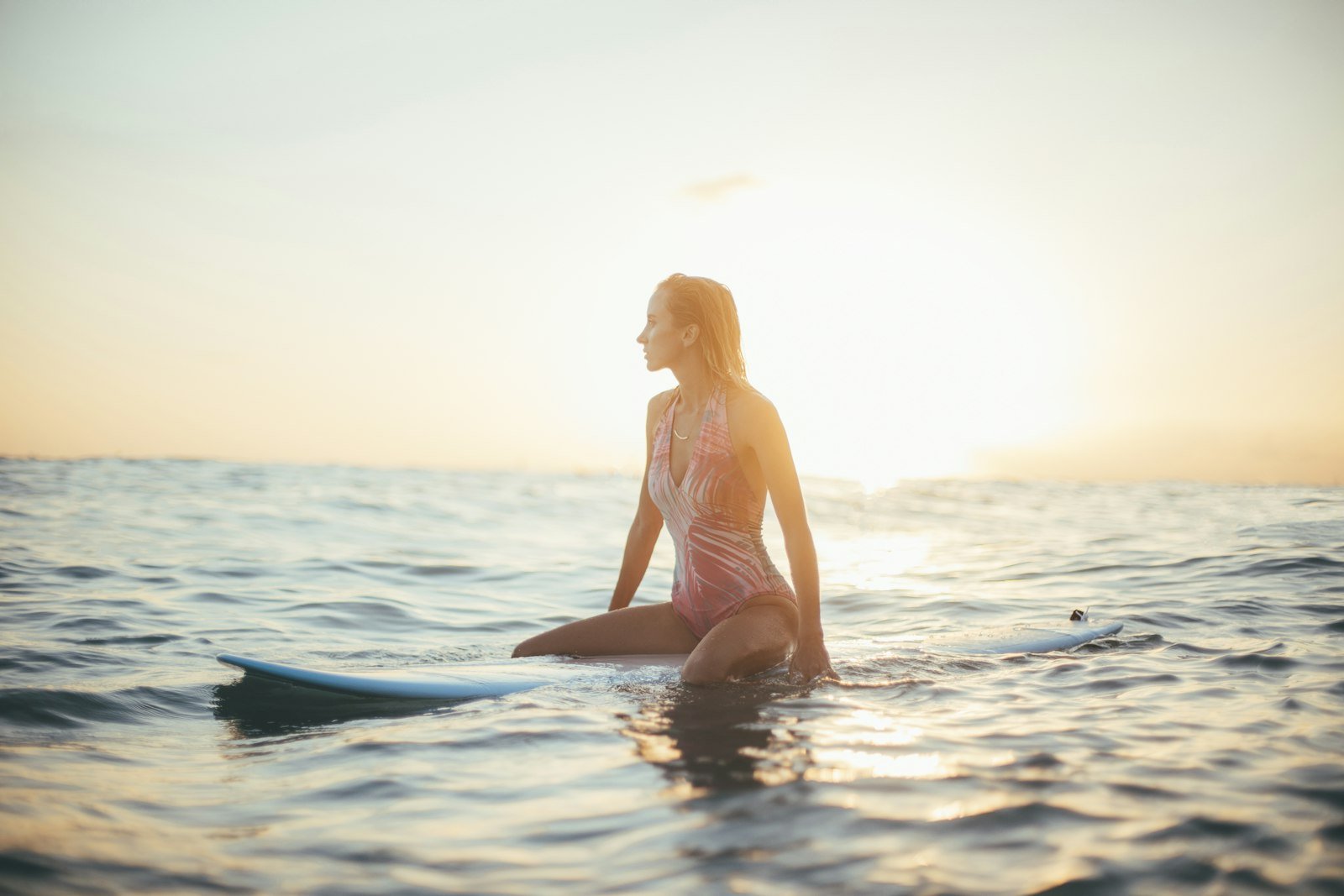
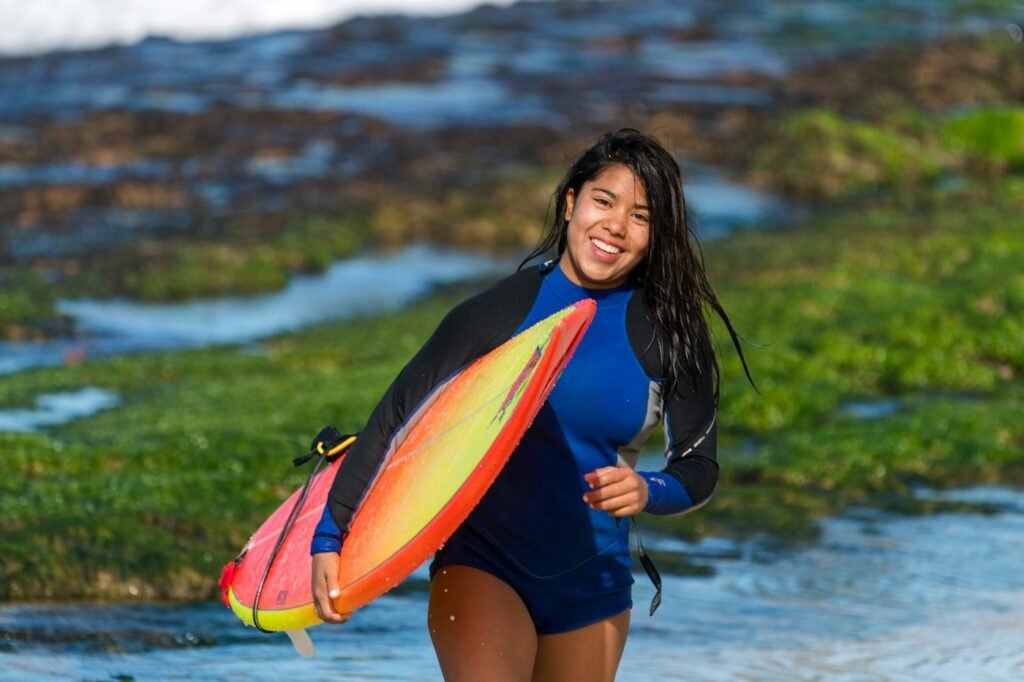
Surfing is arguably the toughest test for swimwear. You’re paddling, popping up, getting tumbled by waves and duck-diving under them. Water rushes past at speed, and anything that can come loose probably will.
- Tops: Look for sporty crop-style or scoop-neck bikini tops, cross-back or racerback designs, and tops with a wide underband. Avoid bandeaus and string triangles for big surf.
- Bottoms: Choose bottoms with moderate coverage and a secure waistband. Some surfers prefer a slightly higher rise, which is less likely to be pulled down by a wave.
- One-pieces: A fitted one-piece with a secure back is a reliable choice, and long-sleeve surf suits add sun and board-rash protection.
- Rash guards: A snug rash guard or surf top over your swimsuit adds a layer of security, protects from board rub and gives your skin extra sun coverage.
Swimming laps
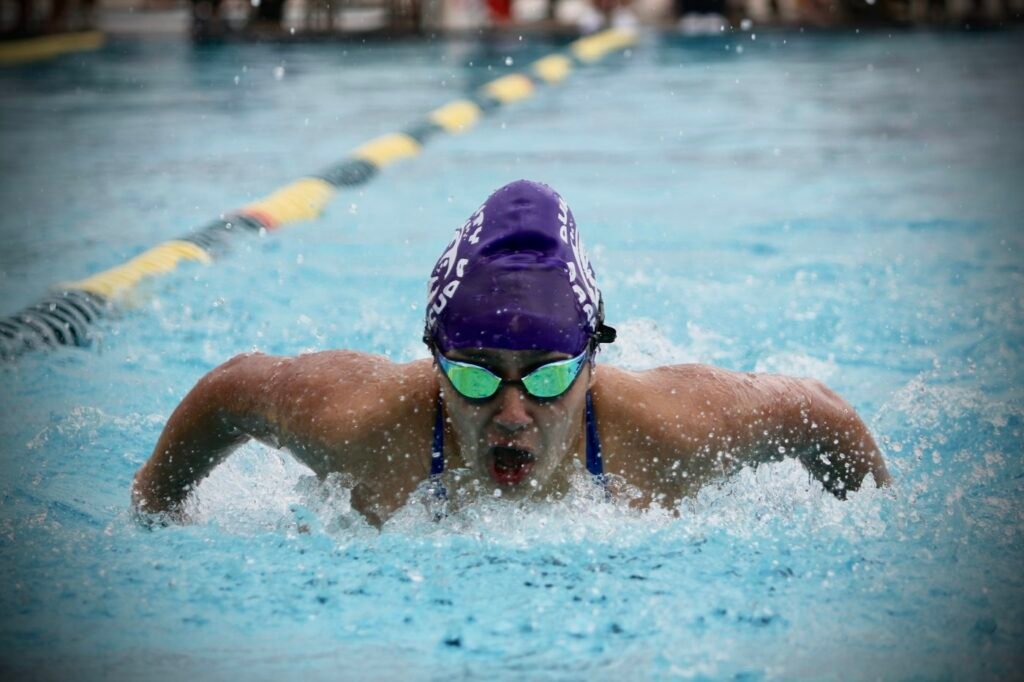
Lap swimming puts less sudden stress on a suit than surfing, but it adds repetition and chlorine. Your suit needs to stay in place stroke after stroke and withstand regular pool exposure.
Style
A one-piece is the classic choice for laps because it has no waistband to shift and creates less drag. Open-back and racerback cuts give your shoulders full range of motion. If you prefer two pieces, a sporty bikini with a snug top and full or moderate bottom works, as does a fitted tankini that won’t float up.
Fabric
Chlorine gradually breaks down elastane, which is what gives most swimsuits their stretch. That’s why frequent pool swimmers often choose suits with a high polyester content or fabrics described as chlorine-resistant. They tend to hold their shape and color longer with regular use. Our swimwear fabrics guide explains the differences between common fabric blends.
Pro tip: Rinse your suit in cool, fresh water as soon as possible after every swim. Removing chlorine promptly is one of the simplest ways to extend the life of any swimsuit.
Beach volleyball, paddleboarding and beach games
Beach sports involve jumping, lunging, diving into sand and a lot of reaching overhead. Stand-up paddleboarding adds balancing, kneeling and the occasional unplanned swim. Each calls for slightly different priorities.
- For jumping and reaching: A supportive top that doesn’t lift when you raise your arms is essential. Sporty bikini tops with a wide band, or one-pieces with a secure neckline, work well.
- For lunging and diving: Bottoms with wider side panels and firm leg openings stay put better during big movements.
- For paddleboarding: Comfort over long sessions matters. Swim shorts, high-waisted bottoms or a one-piece with a rash guard offer coverage for kneeling and sun protection for long stretches on the water.
Sand is abrasive, so smooth, tightly woven fabrics tend to shed it more easily and withstand friction better than delicate textures like crochet or loose ribbing.
Support for active days with a larger bust
If you have a larger bust, active swimwear needs to provide real support, not just coverage. Features to look for include band-sized tops that fit like a sports bra, underwire or molded cups, wide adjustable straps and multi-hook back closures. Some sporty swim tops are designed specifically with high-impact movement in mind. Our guide to swimwear for larger busts goes into more detail on the construction features that make the biggest difference.
Sun protection for long active sessions
Active days often mean long hours outdoors, and sweat and water can wash sunscreen away faster than you’d expect. A few simple habits help:
- Consider swimwear or rash guards made from fabrics with a UPF rating, which indicates how much UV radiation the fabric blocks.
- Use water-resistant sunscreen on exposed skin and reapply according to the label, especially after swimming or toweling off.
- Don’t forget easily missed spots like the backs of your legs, your shoulders and the skin along strap lines.
The movement test: try before you trust
A suit can look perfect standing still and fail the moment you move. When you try on active swimwear, at home or in a changing room, put it through a quick routine:
- Raise your arms overhead and check that your top doesn’t lift or shift.
- Jump a few times to test bounce and support.
- Do a deep squat or lunge to see whether the bottoms stay in place.
- Twist side to side and bend forward to check the neckline and straps.
- Mimic your sport: a paddling motion, a freestyle stroke or a volleyball reach.
If you’re ordering online, keep the tags on and test at home before wearing it outdoors. Check the return policy first, since many retailers only accept swimwear returns with hygiene liners and tags intact.
FAQ
Should I size down for active swimwear?
If you’re between sizes, the smaller one is often more secure in the water because fabric relaxes when wet. It should still be comfortable, though. If it digs in, restricts breathing or leaves deep marks, stick with your usual size.
Can I surf in a regular bikini?
You can, especially in small waves, but a bikini designed for movement is far less likely to shift. Look for secure closures, wider straps and moderate-coverage bottoms, or add a rash guard over the top.
Why does my swimsuit get baggy after a season of pool swimming?
Chlorine, heat and sunscreen gradually break down elastane, the fiber responsible for stretch and recovery. Rinsing after each swim, avoiding hot tubs in your favorite suit and choosing chlorine-resistant fabrics all help it last longer.
Is a tankini good for active days?
A fitted tankini with an inner shelf bra can work well. Loose, flowy tankini tops tend to float up in the water, so save those for lounging.
The right active swimsuit lets you stop thinking about your swimwear and focus on the wave, the lap or the game. Prioritize a snug fit, secure straps and closures, and enough coverage to grip, then run the movement test before you commit. Your future self, mid-wipeout, will thank you.