Swimwear labels can read like a chemistry exam: nylon, polyamide, polyester, elastane, spandex, recycled blends. But the fabric is one of the biggest factors in how a swimsuit feels, how it fits after a few swims, and how long it lasts. Two suits with identical cuts can behave very differently once they’re wet.
This guide explains what the common swimwear fabrics are, what each one is good at, and how to read a composition label so you can pick the right suit for the way you swim, lounge or travel.
Quick takeaways
- Almost every swimsuit is a blend: a main fibre (usually nylon or polyester) plus elastane for stretch.
- Nylon feels soft and silky with great stretch. Polyester is generally tougher against chlorine and fading.
- More elastane means more stretch and hold, but elastane is the part most vulnerable to chlorine, heat and sunscreen.
- Recycled nylon and polyester perform much like their conventional versions.
- Textured fabrics such as ribbed, crinkle and terry look great but may need gentler care.
How to read a swimwear fabric label
Look inside your swimsuit and you’ll usually see a percentage breakdown, something like “80% nylon, 20% elastane”. The first fibre is the base fabric, which gives the suit its feel, durability and colour. The second is the stretch fibre, which lets the suit hug your body and recover its shape.
You’ll also see different names for the same fibres depending on where the suit was made or sold:
- Nylon is often labelled polyamide, particularly in Europe.
- Elastane and spandex are the same fibre. “Spandex” is more common in North America, “elastane” in Europe and elsewhere.
- PBT is a type of polyester with natural stretch, often used in chlorine-resistant swimwear.
Linings are usually listed separately, often as a lighter nylon or polyester blend.
Pro tip: If a label lists only the outer fabric, check the product description online. Lining composition and fabric weight are often mentioned there and can tell you a lot about opacity and support.
Nylon (polyamide): soft, stretchy and classic
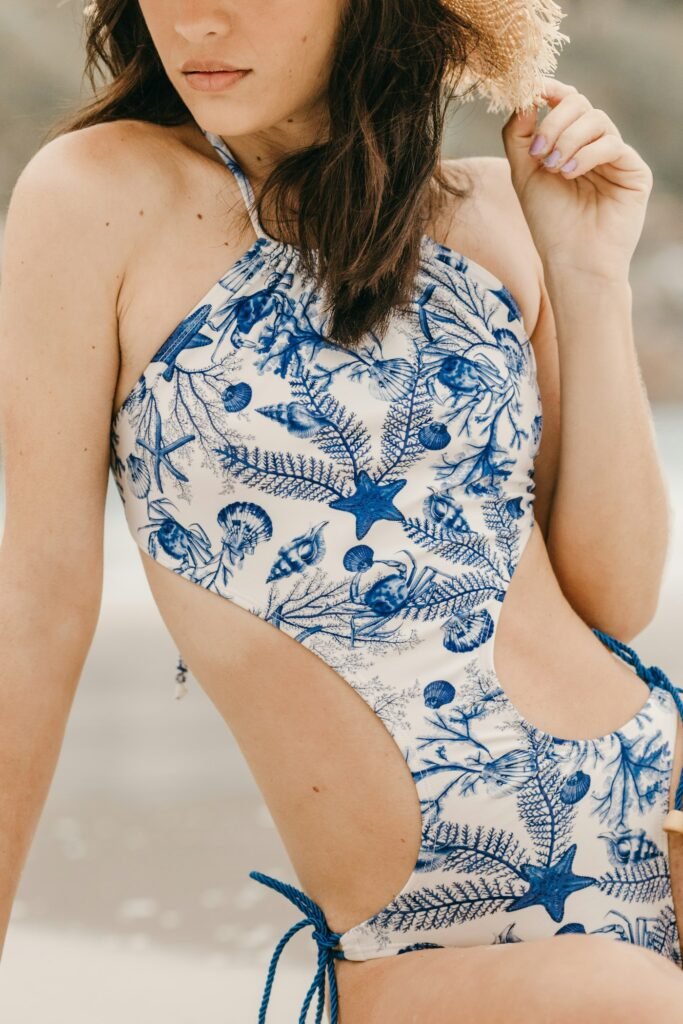
Nylon has been the go-to swimwear fibre for decades. Blended with elastane, it creates a fabric that feels smooth and silky, stretches in every direction, and snaps back into shape. It takes dye beautifully, so you’ll find it in rich colours and detailed prints.
Nylon’s main weaknesses are chlorine and sun. Over time, pool chemicals and UV exposure can fade colours and weaken the fibres, and nylon blends tend to lose their shape faster than polyester when used heavily in pools.
Best for: beach days, holidays, lounging and occasional swims where comfort and a sleek fit matter most.
Polyester: durable and colourfast
Polyester swimwear used to have a reputation for feeling stiff, but modern polyester blends are much softer. Polyester’s big advantages are that it resists chlorine better than nylon, holds its colour well in the sun, and dries relatively quickly.
The trade-off is that polyester blends can feel slightly less silky and often have a bit less stretch than nylon. That can actually be helpful if you want a suit that feels firm and stays put.
Best for: regular pool swimmers, swim lessons, and anyone who wants a suit that keeps its colour season after season.
PBT and “chlorine-resistant” polyester
PBT (polybutylene terephthalate) is a polyester with some built-in stretch, so it needs less elastane or none at all. Suits made mostly or entirely from polyester, including PBT, are frequently marketed as chlorine-resistant. They’re a popular choice for training suits, though they usually feel firmer and less stretchy than a typical beach bikini.
Elastane (spandex): the stretch behind the fit
Elastane is what makes swimwear hug your body. A few percent gives a garment some give; most swimwear uses a larger share, commonly somewhere in the range of 10 to 25 percent, for that close, sculpted fit.
Elastane is also the most fragile part of the blend. Chlorine, heat, sunscreen and body oils gradually break it down, which is why an old swimsuit goes baggy, loses its grip at the leg openings or develops a slightly crinkled, see-through look. Suits with a high elastane content feel wonderful but need careful rinsing and drying to last.
If you’re curious about why fit and stretch matter so much, our guide on measuring for a swimsuit explains how stretch affects sizing between brands.
| Fibre | Feel | Chlorine resistance | Colour retention | Best for |
|---|---|---|---|---|
| Nylon/polyamide + elastane | Soft, silky, very stretchy | Moderate | Good, fades with heavy sun and pool use | Beach days, lounging, holidays |
| Polyester + elastane | Smooth, slightly firmer | Good | Very good | Regular pool use, mixed use |
| PBT or high-polyester | Firm, less stretch | Very good | Very good | Laps, training, lessons |
| Recycled nylon or polyester | Similar to conventional | Similar to conventional | Similar to conventional | Any, with a lower-impact fibre source |
Recycled blends: how do they compare?
Recycled swimwear fabrics are usually made from recycled nylon or recycled polyester. Recycled nylon is often made from pre-consumer waste like factory offcuts or post-consumer waste such as old fishing nets and carpets. Recycled polyester is commonly made from plastic bottles or textile waste.
Once processed, the fibres behave very similarly to virgin nylon and polyester, so you don’t have to trade performance for a lower-impact material. The stretch fibre is usually still conventional elastane, because recycled elastane is much less common.
“Recycled” on a label can mean anything from a small percentage to the whole outer fabric, so check the composition. Third-party certifications can help verify recycled content. Our guide to sustainable swimwear explains what to look for and what the common claims actually mean.
Fabric textures and finishes
Textured swimwear is everywhere, and it’s a great way to add interest to a simple silhouette. Each texture has its own quirks.
Ribbed
Ribbed fabrics have raised vertical lines knitted into them. They add visual texture, tend to be a bit thicker and are often forgiving with fit. Ribbed fabric can hold more water, so it may take a little longer to dry.
Crinkle and seersucker
Crinkle fabrics have a puckered surface that stretches to fit. They’re often sold as “one size fits most”, which can be convenient but less precise. Avoid wringing them or using heat, which can flatten the texture.
Terry and towelling
Terry swimwear has a soft looped surface that looks relaxed and retro. It’s comfortable for lounging, but the loops can snag on rough surfaces like pool edges or rocks, and it absorbs more water than smooth fabrics.
Shimmer, metallic and velvet-look
Metallic threads, foil prints and velvet-look fabrics look beautiful for poolside and evening wear. These finishes are usually more delicate, so they’re best saved for lighter use and washed gently by hand.
Pro tip: Textured fabrics often show wear more quickly where they rub against lounge chairs or sand. Laying a towel down before you sit helps keep them looking fresh.
Linings, fabric weight and opacity
The outer fabric isn’t the whole story. A good lining adds opacity, shapes the suit and helps it keep its form when wet. Light colours, especially white and pastels, benefit most from full lining because wet fabric can become more transparent.
Fabric weight also matters. Heavier, denser knits feel more supportive and give smoother coverage, while lighter fabrics dry faster and pack smaller. If you prefer a firmer, more structured feel, look for descriptions such as “double-lined”, “compression” or “sculpting fabric”.
Sun protection fabrics
Some swimwear is sold with a UPF (Ultraviolet Protection Factor) rating, which indicates how much UV radiation the fabric blocks. Rash guards, swim leggings and long-sleeve swimsuits are often UPF-rated. Remember that a UPF fabric only protects the skin it covers, so keep applying and reapplying sunscreen to exposed areas.
Choosing the right fabric for how you swim
Match the fabric to your plans:
- Mostly beach and holidays: a nylon-elastane blend gives the softest feel and best stretch.
- Regular pool swims: polyester or PBT blends hold up much better against chlorine.
- Active days: look for a firmer, well-lined polyester blend. Our guide to swimwear for active days covers style features too.
- Lower-impact choice: recycled nylon or polyester, ideally with certified recycled content.
FAQ
Is nylon or polyester better for swimwear?
Neither is better overall. Nylon feels softer and stretchier, while polyester generally holds up better to chlorine and sun. Choose nylon for comfort at the beach and polyester for frequent pool use.
What does “chlorine-resistant” mean?
It usually means the suit is made mostly or entirely from polyester, often PBT, with little or no elastane, so it resists breakdown from pool chemicals. It will still wear out eventually, just more slowly.
Are recycled swimwear fabrics as durable?
Recycled nylon and polyester generally perform very similarly to their conventional versions. Durability depends more on the fibre type, blend and care than on whether the fibre is recycled.
Why does my swimsuit go see-through over time?
The elastane in the fabric breaks down from chlorine, heat, sun and sunscreen, which thins and stretches the fabric. Rinsing after every wear and drying in the shade slows this down.
The right fabric, the right suit
Once you know what the label means, fabric becomes one of the easiest ways to narrow your choices. Pick the blend that fits your plans, then give it good care. Our guide on caring for your swimwear shows you how to make it last.