Buying swimwear online is convenient until the package arrives and nothing fits. Swimsuit sizing is notoriously inconsistent between brands, and a size that works in one label can be too tight or too loose in another. The single best thing you can do is measure yourself properly and compare those numbers to each brand’s size chart, rather than relying on the size you usually buy.
This guide walks you through exactly which measurements to take, how to take them accurately at home, and how to use them to choose the right size, whether you are buying a bikini, a one-piece or a tankini.
Quick takeaways
- You need a soft measuring tape and about ten minutes.
- Take five key measurements: bust, underbust, waist, hips and torso (for one-pieces).
- Always compare to the specific brand’s size chart; sizes vary widely.
- If you fall between sizes, let the most important measurement for that style decide.
- Swimwear should fit snugly when dry, since fabric relaxes slightly when wet.
What you need before you start
Gather a few simple things:
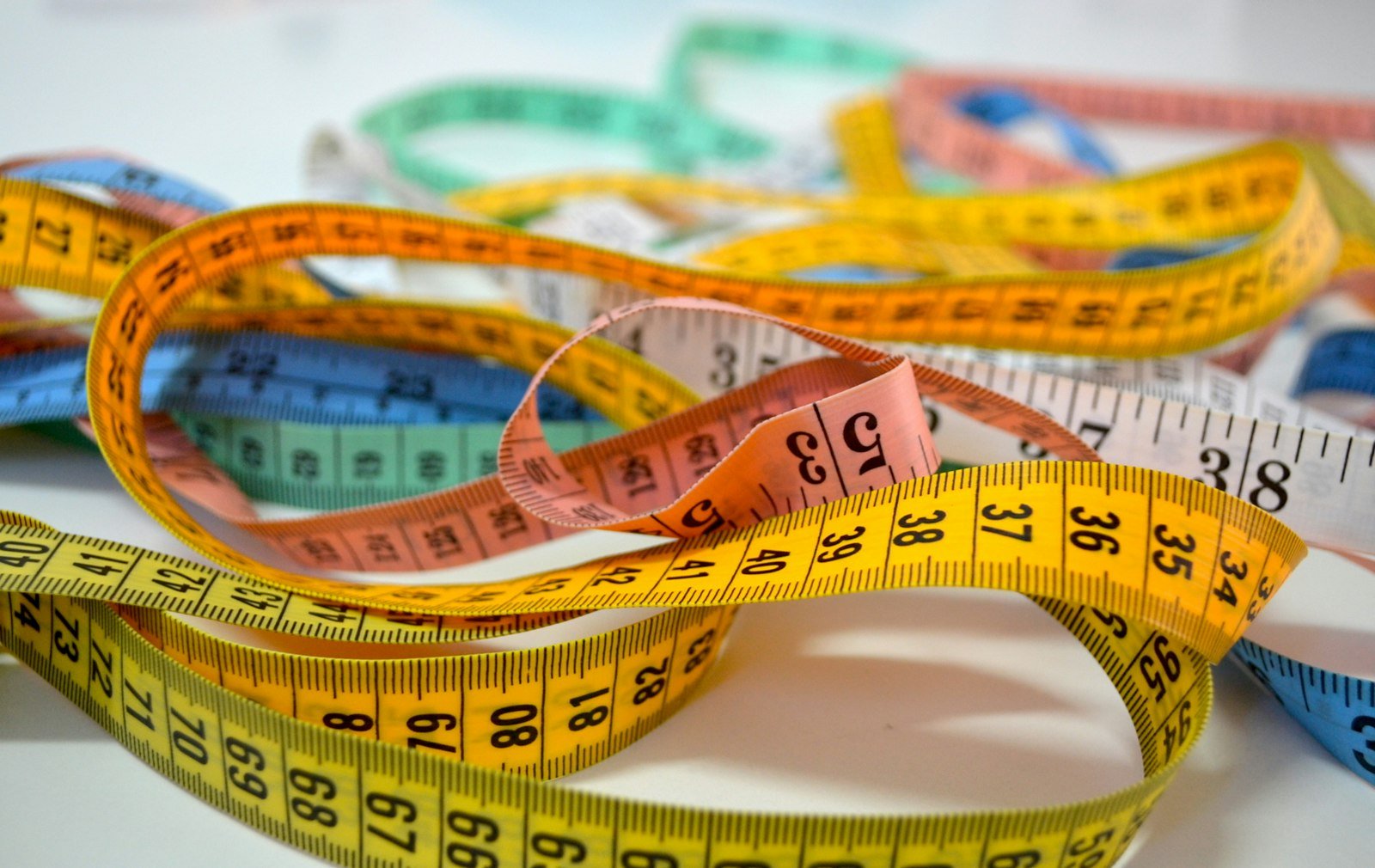
- A soft, flexible measuring tape, the kind used for sewing. A metal tape measure will not wrap around your body accurately.
- A mirror, so you can check the tape is level.
- Minimal clothing. Measure over underwear or a swimsuit that fits well, not over clothes. For bust measurements, wear a non-padded bra or a swim top without heavy padding.
- Something to write with, or a notes app on your phone.
Stand upright and relaxed, breathing normally. Keep the tape snug but not tight: it should lie flat against your skin without pressing in. If you can, ask someone to help with measurements that are hard to see, such as the torso loop.

The five measurements that matter
1. Bust
Wrap the tape around the fullest part of your bust, usually across the nipples, keeping it level all the way around your back. Let your arms hang by your sides. Make sure the tape is not sliding down at the back; checking in a mirror helps.
Why it matters: Bust measurement determines top size in S/M/L sizing, and combined with underbust, it determines cup size in bra-sized swimwear.
2. Underbust
Wrap the tape snugly around your ribcage, directly under your bust where a bra band would sit. Keep it level and exhale normally before reading the number.
Why it matters: Underbust determines the band size for bra-sized tops. The band provides most of the support in a swim top, so this number is crucial if you need support.
3. Waist
Find your natural waist, which is usually the narrowest part of your torso, a little above your belly button. An easy way to locate it is to bend to one side; the crease that forms is your natural waist. Wrap the tape around, keeping it level, without sucking in.
Why it matters: Waist measurement is important for high-waisted bottoms and one-piece suits.
4. Hips
Stand with your feet together and wrap the tape around the fullest part of your hips and seat. This is often lower than people expect, so move the tape up and down slightly and use the largest measurement.
Why it matters: Hip measurement is the main guide for bikini bottom size.
5. Torso (for one-pieces)
Torso length, sometimes called girth or torso loop, is measured vertically. Place the tape at the top of one shoulder, midway between your neck and shoulder edge. Run it diagonally down across the front of your body, through your legs, and back up the back to the same starting point. This is easiest with a helper.
Why it matters: One-piece suits that are too short in the torso pull down at the shoulders and ride up; ones that are too long sag or bunch. If you have a long or short torso, this measurement is the key to a comfortable one-piece. If you are deciding between styles, our guide to one-piece vs bikini vs tankini can help.
How to use a size chart
Once you have your numbers, open the size chart for the specific brand and style you are considering. Size charts may be listed in inches or centimeters, so note both if you shop across regions.
Match each measurement to the chart:
- For bikini tops in S/M/L sizing, use your bust measurement. For bra-sized tops, use your underbust for the band and the difference between bust and underbust for the cup, following the brand’s own method.
- For bikini bottoms, use your hip measurement first, then check the waist, especially for high-waisted styles.
- For one-pieces, check bust, waist and hips, and torso if the brand lists it.
Many people are a different size on top and bottom. That is completely normal, and it is one of the big advantages of buying bikini separates. If you would like guidance on styles once you know your size, our guide to choosing a bikini for your body type covers fit on different frames.

Which measurement matters most for each piece
Different garments depend on different numbers. Use this as a quick reference when you check a size chart.
| Piece | Primary measurement | Also check |
|---|---|---|
| Triangle or bandeau top (S/M/L) | Bust | Underbust for snugness |
| Bra-sized or underwire top | Underbust (band) | Bust (cup) |
| Standard bikini bottoms | Hips | Waist |
| High-waisted bottoms | Waist | Hips |
| One-piece swimsuit | Torso | Bust, waist and hips |
| Tankini | Bust | Waist and hips |
In practice, your measurements may land in different rows of a brand’s size chart. That is where the next section comes in.
What to do if you are between sizes
It is very common to fall between two sizes. Here is how to decide:
- Consider the style. Tie tops and side-tie bottoms are adjustable, so the smaller size may work. Fixed-size pieces with elastic are less forgiving.
- Prioritize the most important measurement. For a supportive top, prioritize the band. For bottoms, prioritize hips. For one-pieces, prioritize torso and bust.
- Read the fit notes. Many product pages say whether a style runs small, large or true to size. Customer reviews can also mention fit, though remember everyone’s body is different.
- Think about fabric. Styles with more stretch are more forgiving. Structured or lined suits with less stretch may need the larger size.
Pro tip: Swimwear fabric relaxes slightly when wet. If you are torn between two sizes in a stretchy fabric, the snugger size often fits better in the water, as long as it does not dig in when dry.
Converting between regional sizes
Swimwear sold in the US, UK and EU often uses different size numbers. A size label that means one thing in the UK may mean something else in the US or in continental Europe. Bra-sized tops also use different band and cup labeling systems across regions.
The safest approach is to ignore the size label entirely and use your measurements. If a retailer offers a conversion chart, use it as a cross-check, but go by the measurements in centimeters or inches wherever possible.
Checking the fit when your suit arrives
When your swimsuit arrives, try it on right away, ideally with the tags still attached and over underwear if the retailer requires it for returns. Check:
- Top band: Level and snug, not riding up at the back.
- Cups: No gaping or spilling. The top edge should lie flat.
- Straps: Comfortable, not digging in or sliding off.
- Bottoms: The waistband stays up when you sit or bend. Leg openings lie flat.
- One-pieces: No pulling at the shoulders or bunching at the waist.
Move around: squat, twist, raise your arms. If it stays in place and feels comfortable, you have found your size. For styles that need extra support, our article on swimwear for larger busts explains what to look for in a supportive fit.
Keep a record for next time
Save your measurements in your phone, along with notes on which brands and styles fit well and in what size. Measure again every season or so, since bodies naturally change over time. Having your numbers ready makes online shopping much quicker and helps reduce returns.
FAQ
Should I measure over clothes?
No. Measure over underwear or a well-fitting swimsuit so the tape sits close to your body. Clothing adds bulk and can make your measurements larger than they really are.
How tight should the measuring tape be?
Snug but not tight. The tape should lie flat against your skin without compressing it. You should be able to slide a finger under it comfortably.
What if my measurements match different sizes?
That is normal. Choose separates in different sizes where possible. For a one-piece, prioritize torso and bust, and consider adjustable straps.
Do swimsuits run small?
Swimsuits often feel snugger than regular clothes because they are designed to hold their shape in water. That is why comparing your measurements to the specific size chart is more reliable than using your usual clothing size.
How often should I remeasure?
Measure before a major swimwear shop, or roughly every season. Bodies change naturally, and fresh measurements help you choose the right size every time.
Measuring yourself takes just a few minutes, but it can save you from returns, disappointment and suits that sit unworn. Take your numbers, check each brand’s chart, and choose with confidence. The right fit makes every beach day more comfortable.