Here’s a secret the matching-set industry would rather you didn’t hear: you do not need a new bikini for every vacation. You need a handful of smart pieces that get along with each other. Think of it as a capsule wardrobe, except it’s tiny, it fits in a sandwich bag and it never needs ironing.
Mix-and-match is the lazy genius move of swimwear. You buy fewer pieces, you get more outfits, and you get to wear a top that fits your bust with a bottom that fits your hips, instead of whatever size combination a pre-packed set decided you were. Below: how to build the system, how to make colours and prints play nicely, and how to avoid the “I got dressed in the dark” look.
Quick takeaways
- Buying separates lets you choose the right size for your top and your bottom independently, which is a fit win before style even enters the chat.
- Start with two or three solid “anchor” pieces in colours you love, then add one or two prints that share a colour with them.
- Repeat something across pieces: a colour, a texture, a hardware finish or a strap detail. That’s the glue.
- Vary the style, not just the colour. A triangle top and a balconette top give you different looks with the same bottoms.
- The math is generous: three tops and three bottoms that all work together give you nine combinations.
Why matching sets are overrated (said with love)
Matching sets are lovely. They’re also a bit bossy. They assume your top half and your bottom half are the same size, which, for a huge number of people, they simply are not. If you’ve ever squeezed into a top to get the bottoms to fit, or rolled the waistband of bottoms that were a size too big because the top fit perfectly, you already know the problem.
Separates fix that instantly. You pick your top by bust and band, your bottom by hips and rise, and suddenly everything sits where it should. If you’re not sure what your numbers are, our guide to measuring yourself for a swimsuit takes about five minutes and a tape measure.
The bonus round: when one piece wears out, gets stretched by a pool, or mysteriously vanishes in a hotel laundry, you replace one item instead of retiring a whole set. Your wallet will notice. Your suitcase will too.
The lazy genius formula: anchors, accents and one wildcard
You don’t need a mood board or a degree in colour theory. You need a simple system you can repeat every time you shop.
Step 1: Pick your anchors
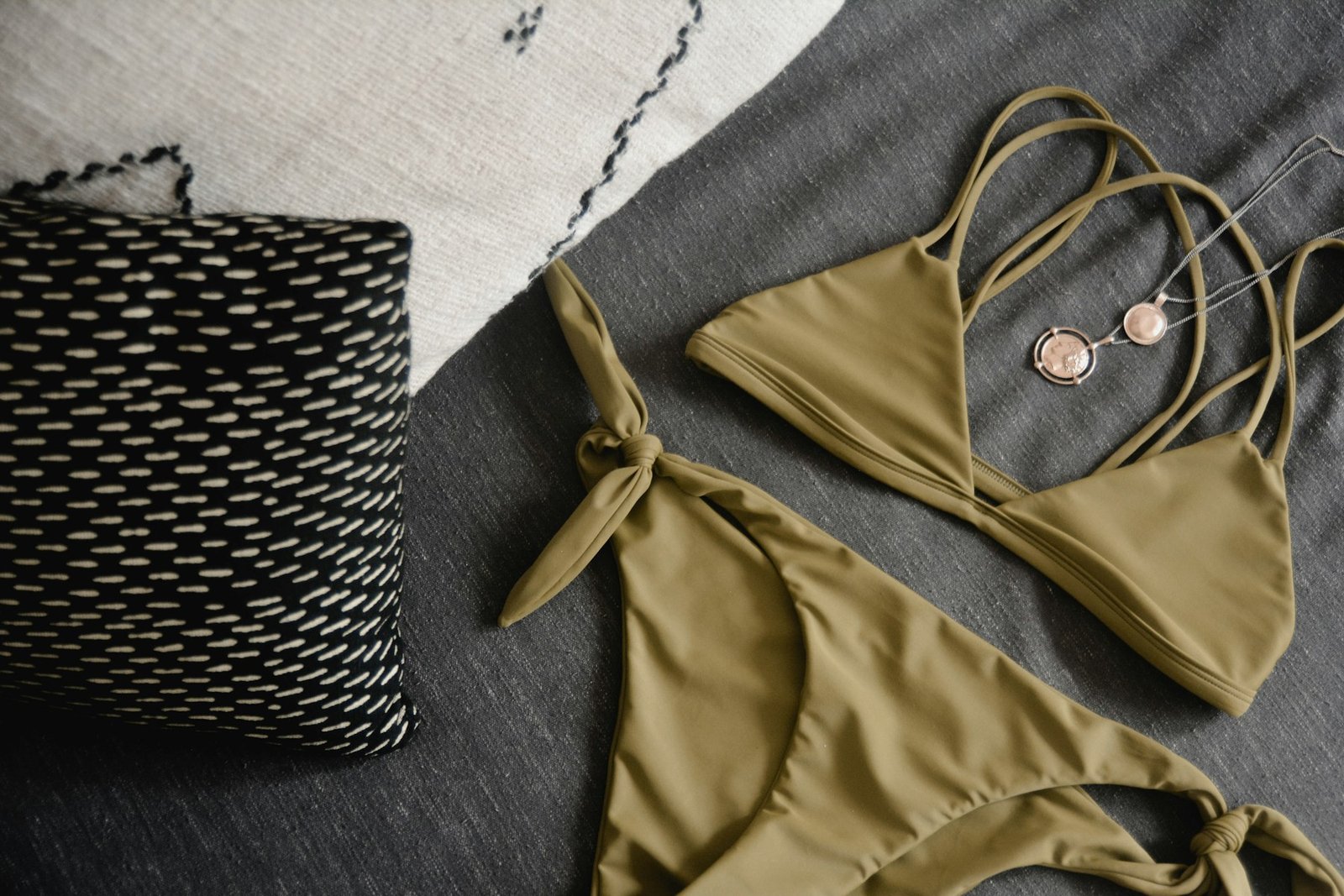
Anchors are solid-coloured tops and bottoms that go with almost everything. Black and navy are the obvious ones, but anchors don’t have to be dark. Chocolate brown, olive, cream, terracotta or a deep teal can do the same job, as long as you genuinely like wearing them. Aim for two or three anchor pieces to start: perhaps one top and two bottoms in different cuts, or the reverse.
Step 2: Add your accents
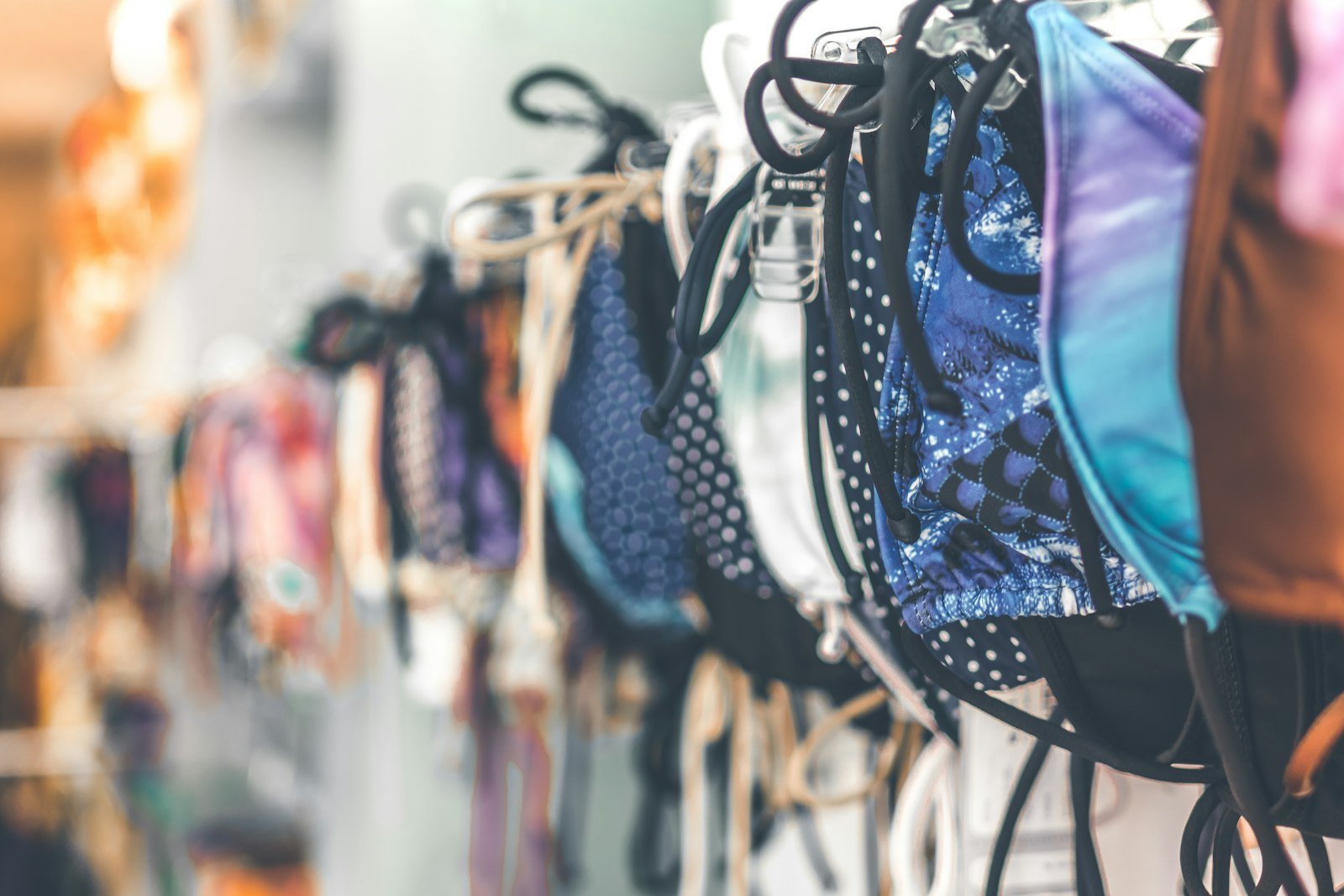
Accents are where the fun lives: a print, a brighter colour, a texture. The rule that keeps accents from going rogue is simple. Each accent should share at least one colour with your anchors. A floral print with navy in it pairs with your navy bottoms. A stripe with a touch of terracotta pairs with your terracotta top. Our guide to choosing swimsuit colours and prints has more on picking shades that suit you.
Step 3: Allow one wildcard
Every great capsule has a piece that doesn’t technically follow the rules: the neon top, the metallic bottoms, the animal print you bought on impulse and refuse to apologise for. One wildcard keeps your swim wardrobe from feeling like a uniform. Pair it with an anchor and it instantly looks intentional.
The glue: how to make mismatched look on purpose
The difference between “cute mix-and-match” and “I grabbed the first two things in the drawer” is usually one small repeated detail. Pick at least one of these to connect your top and bottom.
- A shared colour: the easiest glue. Print top, solid bottom in a colour pulled from the print. Done.
- The same texture: ribbed with ribbed, crinkle with crinkle, smooth with smooth. Texture can tie together two completely different colours.
- Matching hardware: gold rings on the top and gold rings on the bottom look coordinated, even if the colours don’t match. Silver with silver, tortoiseshell with tortoiseshell.
- Echoed details: tie sides on the bottoms and a tie-back top, or a scalloped edge repeated on both pieces.
- Tone-on-tone: two shades of the same colour family, like dusty pink with deep rose or sage with forest green, looks deliberate and polished.
Pro tip: Lay your pieces flat on the bed before you pack. If a combination makes you squint and tilt your head, it’s not a combination. If it makes you want to go to the beach immediately, it is.
Mix styles, not just colours
Here’s where most people leave outfits on the table. They swap colours but keep buying the same cut over and over. Changing the shape of a top or the rise of a bottom gives you a genuinely different look, even in the same shade.
For tops, a triangle, a bandeau, a balconette and a sporty scoop all create different necklines and levels of support. For bottoms, a high-waisted brief, a hipster and a cheekier cut change the whole silhouette. If you want the full rundown on what each style does, see our explainers on bikini top styles and bikini bottom cuts.
| If you have… | Add this for variety | Why it works | |
|---|---|---|---|
| Triangle top | Balconette or underwire top | More structure and a different neckline for days you want lift | |
| Bandeau top | Halter or scoop top | Straps for swimming and activity, bandeau for lounging | |
| High-waisted bottoms | Hipster or tie-side bottoms | A lower rise changes the proportions completely | |
| Cheeky bottoms | Full-coverage bottoms | Easy switch for active days or more relaxed settings | |
| Sporty scoop top | Wrap or twist-front top | Same support level, more dressed-up feel |
A mix of styles also covers more situations. The sporty top and full bottoms are for paddleboarding. The bandeau and high-waisted bottoms are for the long lunch. Same suitcase, different personality.
Building a travel capsule that actually fits in your bag
This is where mix-and-match really earns its keep. Instead of packing five matching sets “just in case”, pack a small, coordinated set of separates and wear them in rotation.
- Short trip: two tops and two bottoms that all work together give you four outfits, and one set can dry while you wear the other.
- Week away: three tops and three bottoms give you nine combinations. That’s more than enough, even if you’re in the water twice a day.
- Longer trip: keep the three-and-three core, then add one wildcard piece and one one-piece for variety.
Choose fabrics that dry reasonably quickly and won’t mind being rinsed in a hotel sink. Our beach vacation packing list covers cover-ups, bags and everything else that goes in the suitcase alongside your swimwear.
Common mix-and-match mistakes
A few habits can sabotage the whole system. Spot them early and you’ll save yourself a lot of returns.
- Two loud prints, zero connection: a busy floral with a busy geometric can work, but only if they share a colour. Without that link, they fight.
- Ignoring undertones: a warm, yellow-based white and a cool, blue-based white side by side can make both look slightly off. Same for blacks that have faded differently.
- Mismatched fabric weights: a thick, structured top with whisper-thin bottoms looks and feels unbalanced, especially when wet.
- Buying an orphan: before you buy a new piece, name at least two things you already own that it goes with. If you can’t, it’s an orphan, and orphans live at the back of the drawer.
- Forgetting the cover-up: if your cover-up clashes with half your bikinis, it’s not part of the capsule. Pick one in a colour that works with your anchors.
Keeping your separates in good shape
Mix-and-match only works if the pieces stay looking like they belong together. Colours that fade at different rates can turn a perfect pairing into a near miss. Rinse every piece in cool, fresh water after swimming, wash gently by hand, and dry in the shade rather than in direct sun. Our full guide to caring for swimwear has the details.
Rotating pieces helps too. Elastane needs time to recover between wears, and a capsule makes rotation easy because you’re never relying on one set.
What to look for when you shop
- Separates sold individually, so you can choose a different size for the top and the bottom.
- A solid colour range with a few versatile anchor shades you actually like wearing.
- Prints that pull in at least one of your anchor colours.
- Consistent hardware finishes and fabric textures across the pieces you plan to pair.
- A mix of top styles and bottom rises, not five versions of the same cut.
- Fabric with good stretch recovery that feels similar in weight to your existing pieces.
- A clear size chart and a return policy that lets you try pieces together at home.
FAQ
Is it cheaper to buy bikini separates?
Not always piece by piece, but often over time. Because every top works with several bottoms, you get more outfits from fewer items, and you only replace the piece that wears out rather than a whole set.
Can I mix prints in one bikini?
Yes. The trick is a shared colour. Two prints in different scales, such as a small polka dot and a larger stripe, work best when at least one colour appears in both.
What colours are best for a mix-and-match swim wardrobe?
Whatever you love wearing, plus one or two neutrals that go with it. Black and navy are classics, but cream, olive, brown or a deep jewel tone can anchor a capsule just as well.
How many pieces do I need to start?
Two tops and two bottoms that all work together is a great start. That gives you four combinations, and you can build from there one piece at a time.
Mix-and-match isn’t about following rules. It’s about owning fewer pieces you really like and getting maximum outfits out of them with minimum effort. Pick your anchors, add the fun, find the glue, and enjoy looking like you planned it all along. Because, technically, you did.