Shopping for a bikini online can feel like guesswork. The same style that looks effortless on a model might dig in, slide around, or simply feel wrong on you. The good news is that fit is not a mystery. Once you know what your body needs from a swimsuit, you can scan a product page and spot the right options in seconds.
This guide skips the old “hide this, flatter that” rules. Instead, it focuses on what actually makes a bikini comfortable and secure: support, coverage, proportion and how the pieces sit on your frame.
Quick takeaways
- Start with what you need (support, coverage, staying power), not a body “shape” label.
- Buy tops and bottoms separately if your upper and lower halves are different sizes.
- Wider straps, underwire and banded tops carry more weight than thin strings.
- Bottom cut, rise and side width change how a suit sits far more than print or color.
- Comfort is the real test: if you keep adjusting it, it is not the right fit.
Why body-type rules only get you halfway
You have probably seen charts that sort bodies into fruit and geometric shapes. They can be a useful shorthand, but real bodies rarely match one category neatly. You might have a fuller bust and narrow hips, a long torso and a short rise, or broad shoulders and a small cup size. Two people with the same “shape” can need completely different swimwear.
A more reliable approach is to ask three practical questions:
- How much support does my bust need to feel secure when I walk, swim or play?
- How much coverage do I want on top and bottom, for comfort and for the activity?
- Where do I want the suit to sit, at the waist, on the hips, or lower?
Answer those honestly and the body-type suggestions below become tools rather than rules. If you want the full vocabulary of styles first, our guides to bikini top styles and bikini bottom cuts explain each one in detail.
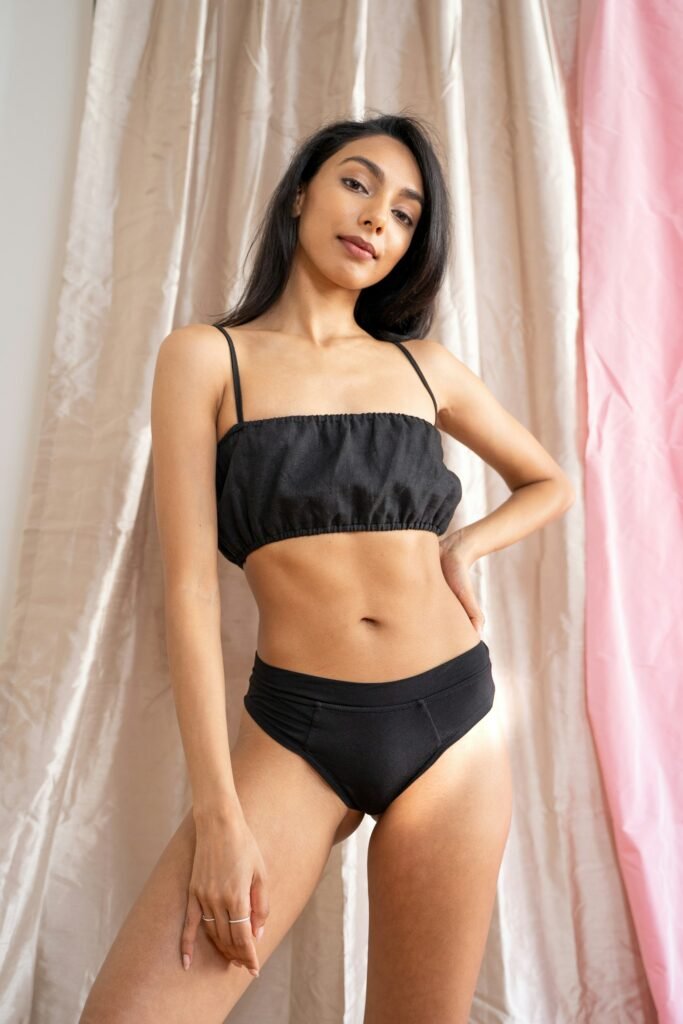
Choosing a top based on your bust
The top is where fit problems show up fastest. A top that is too small spills or shifts; one that is too big gapes or slides down. Here is how to match top styles to the support you need.
Smaller busts
If you have a smaller cup size, you have the widest choice of styles, because you do not need much structure for security. Triangle tops, bandeaus and bralettes all work well. If you would like a little more shape, look for:
- Tops with removable pads, so you can decide how much shape you want.
- Ruching, ruffles, knots or twist details across the front, which add dimension.
- Push-up or molded cups if you prefer a lifted look.
A snug fit still matters. Adjustable ties are your friend here, since fixed-size tops can gape on a smaller frame.
Medium busts
A medium bust can wear nearly everything, so choose based on activity. For lounging, a triangle or bandeau is fine. For swimming or walking the beach, a halter, scoop or balconette top with a proper band gives more confidence. Pay attention to the band: it should sit level around your ribcage without riding up at the back.
Fuller busts
With a fuller bust, the goal is support that comes from the band and structure rather than from your neck. Look for:
- Underwire tops sized by band and cup, like a bra, rather than S/M/L.
- Wider shoulder straps that spread weight instead of cutting in.
- A firm underbust band that anchors the top and does most of the lifting.
- Balconette, full-cup or longline styles that offer more coverage and lift.
- Adjustable or convertible straps, such as crossback options, to fine-tune the fit.
Halter tops can work, but a halter that relies only on a tie at the neck can cause neck strain after a few hours. If you love the look, choose one that also has a solid band. For a much deeper look at supportive designs, see our guide to swimwear for larger busts.
Choosing bottoms based on your hips and seat
Bikini bottoms vary more than most people expect. The rise (how high the waistband sits), the width at the sides and the amount of back coverage all change how a pair feels.
If you want more coverage or a smoother line
High-waisted bottoms sit at or near the natural waist and offer the most coverage. Many people like them for comfort and for the way they create a clean line from waist to hip. Full-coverage bottoms with a moderate rise are a good middle ground. Wider side panels also tend to sit more smoothly than thin strings, because they distribute tension instead of pressing into one spot.
If you have curvier hips
Look for bottoms with wider sides or a moderate rise so the waistband does not roll. Side-tie bottoms are easy to adjust across a range of hip measurements. If you find leg openings dig in, a slightly higher leg cut can actually feel more comfortable, because the elastic sits in a more natural crease.
If you have straighter hips
Lower-rise and hipster styles sit comfortably and stay put. Ruched sides, side ties and higher leg cuts add a sense of shape if that is what you like. Cheekier back coverage is simply a style choice; wear whatever feels good.
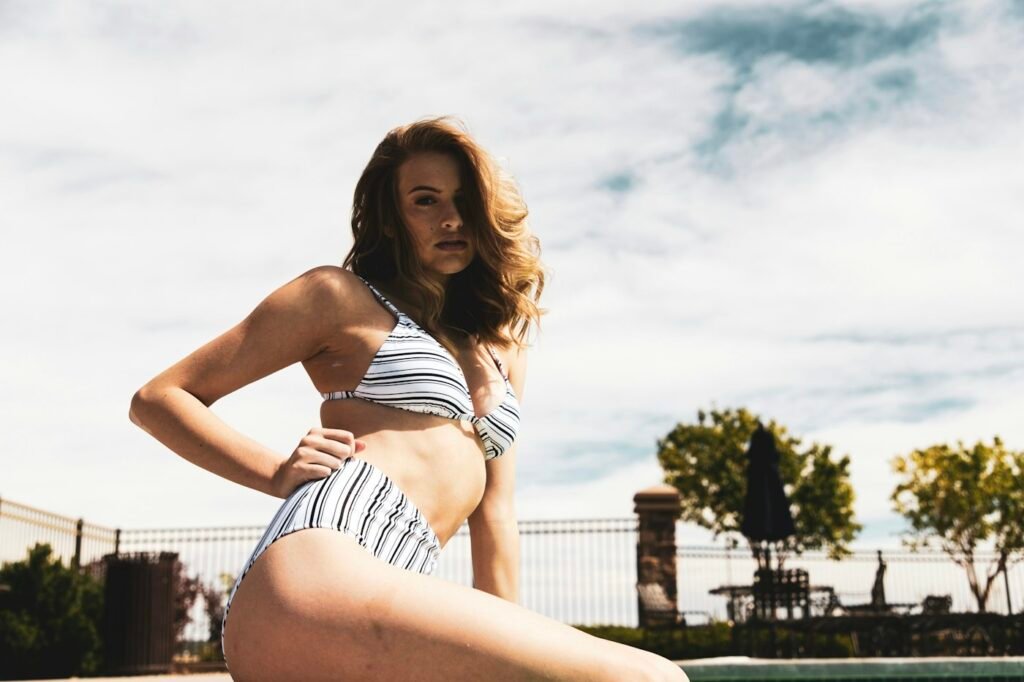
Proportions: torso, shoulders and height
Beyond bust and hips, a few other details affect fit.
Long torso
If you have a long torso, one-piece suits can pull at the shoulders, which is one reason many long-torso shoppers prefer bikinis. For tops, choose styles with adjustable straps so you can position the cups correctly. For bottoms, a high-waisted pair or a longline top can balance coverage if you want less exposed midsection.
Short torso
With a short torso, very high-waisted bottoms can meet a longline top and feel bulky. Mid-rise bottoms and classic-length tops usually sit more naturally.
Petite or tall frames
Petite shoppers often find that strap length and rise are the main issues. Look for adjustable straps and check the listed measurements if a brand provides them. Tall shoppers may find that bottoms sit lower than expected, so a higher rise can restore the coverage you want.
Mix-and-match sizing is your secret weapon
Many people are one size on top and a different size on the bottom. Separates solve this completely. Instead of compromising on a set, buy the top in your top size and the bottom in your bottom size. Many retailers sell coordinating pieces separately for exactly this reason.
If you are unsure what size to order, measure yourself first. Our step-by-step guide on how to measure for a swimsuit walks through bust, underbust, waist and hip measurements and how to use a size chart.
| What you want | Top styles to look at | Bottom styles to look at |
|---|---|---|
| More support | Underwire, balconette, full-cup, longline | Any; pair with a secure fit |
| More coverage | Full-cup, longline, high-neck | High-waisted, full coverage |
| Easy adjustability | Triangle, halter with band, adjustable straps | Side-tie, adjustable ties |
| Staying put when active | Racerback, crossback, sporty bralette | Mid-rise, wider sides |
| Minimal tan lines | Bandeau, strapless | Low-rise, cheeky cuts |
Fit checks to do when you try it on
Whether you are in a fitting room or trying on at home, run through a quick checklist:
- Band: It should sit level and snug. If it rides up at the back, try a smaller band or tighten the ties.
- Cups: No gaping at the top edge and no spilling at the sides or bottom.
- Straps: They should not dig in. If they carry most of the weight, you likely need more band support.
- Waistband: It should not roll down when you sit or bend.
- Leg openings: The elastic should lie flat, not cut in or gape.
- Movement: Raise your arms, bend down, twist and sit. If anything shifts, keep looking.
Pro tip: Swimwear fabric is usually snugger than regular clothing and relaxes slightly when wet. A fit that feels firm but comfortable when dry is usually right; one that feels loose dry may sag in the water.
Match the suit to what you will actually do
A bikini for reading by the pool has different needs than one for bodysurfing. If you plan to swim, play volleyball or chase kids in the waves, prioritize a secure band, straps that do not slide off, and bottoms with a moderate rise. Save the delicate ties and minimal cuts for lower-key days. Think about your real plans for the day before you choose.
Sun exposure matters too. If you will spend long hours outside, more coverage means less skin to protect, and some swimwear is made with UPF-rated fabric. Either way, reapply sunscreen regularly, especially after swimming.
Let go of the “flattering” pressure
Much of the advice aimed at swimwear shoppers is about looking a certain way. You do not owe anyone a particular silhouette at the beach. The best bikini is the one that fits properly, feels secure, and lets you forget about it once you are in the water. Colors, prints and cuts are fun to play with and experiment with. But comfort always comes first.
FAQ
What bikini style suits every body type?
There is no single style that works for everyone, but adjustable pieces come closest. Tops with adjustable straps and a supportive band, paired with side-tie or mid-rise bottoms, fit a wide range of bodies because you can tailor them to your frame.
Should I size up or down in a bikini?
Neither by default. Measure yourself and compare against the brand’s size chart. If you fall between sizes, consider the style: tie tops and bottoms are forgiving, while fixed-size pieces are not. For support tops, prioritize a snug band.
Can I wear a bikini if I have a fuller bust?
Absolutely. Look for tops sold in bra sizes, with underwire, a firm band and wider straps. These give support comparable to a well-fitting bra.
Are high-waisted bikini bottoms only for certain body types?
No. High-waisted bottoms suit anyone who likes the extra coverage, comfort or look. They can feel especially secure for active days because the waistband has more fabric to hold it in place.
How do I know if a bikini top fits properly?
The band should sit level and snug, the cups should hold you without gaps or spilling, and the straps should rest comfortably without digging in. Move around in it: if it stays in place, it fits.
Choosing a bikini gets easier every time you learn what works for your body. Start with support and coverage, use separates to get the sizing right, and let comfort make the final call. The right suit is out there, and it will feel like it was made for you.