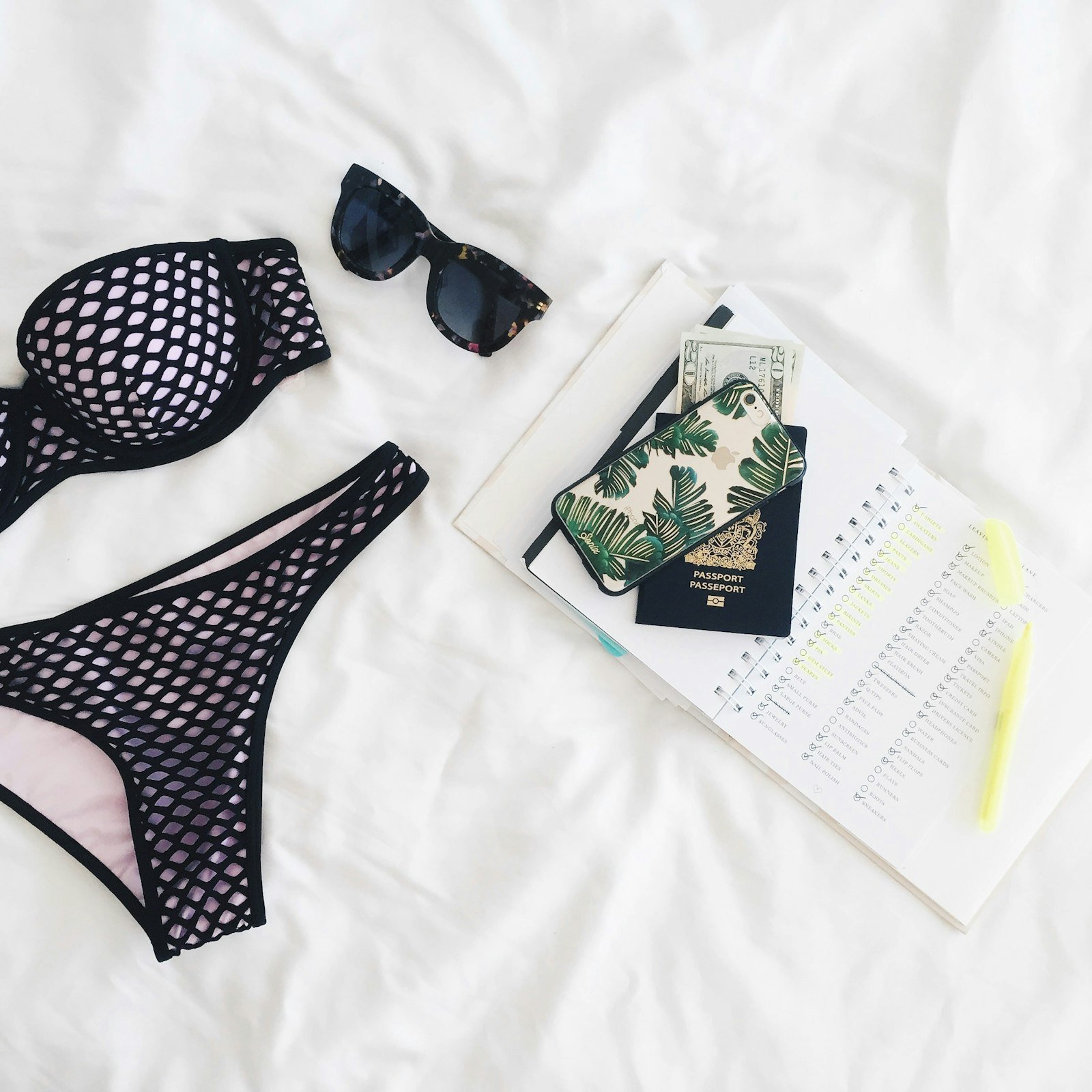
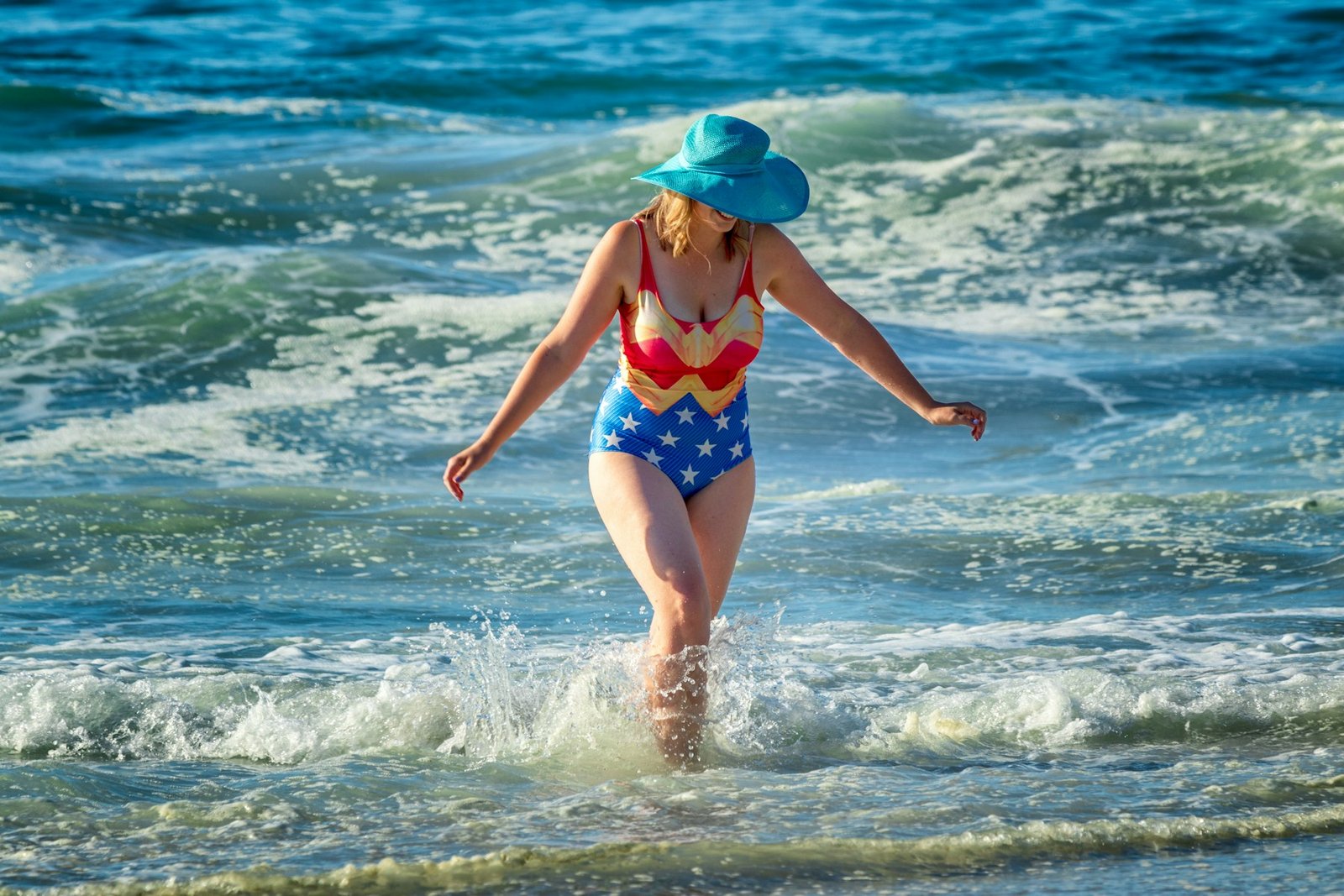
You run into the waves, a wave runs into you, and suddenly you’re doing an underwater search-and-rescue mission for your bikini top. Iconic? Sure. Relaxing? Absolutely not.
Swimwear that stays put isn’t luck, and it isn’t about finding some mythical “perfect body” for swimsuits. It’s about construction, fit and choosing the right style for what you’re actually going to do. Lounging by the pool and diving under waves are different jobs, and they need different suits. Here’s how to pick the ones that hold on as hard as you’re playing.
Quick takeaways
- Fit comes first. A suit that’s too big will slide and gape; one that’s too small will ride up and dig in. Neither stays put.
- Look for wider straps, racerback or crossback designs, underbust bands and secure closures for active days.
- Fully lined, fabric with good stretch recovery holds its shape when wet. Thin, loose fabric doesn’t.
- Fuller-coverage, mid- or high-rise bottoms with a firm waistband stay in place better than skimpy tie-sides in the surf.
- Always do a movement test before you commit: jump, squat, twist and lift your arms.
Why swimwear slips in the first place
Before we fix it, let’s name the culprits. Most wardrobe malfunctions come down to a few very predictable problems.
- Water weight and drag: fabric gets heavier when wet, and water pushes against anything loose. A wave is basically a giant hand pulling at your suit.
- Worn-out elastic: elastane loses its spring over time, especially with heat, chlorine and sunscreen. A suit that once fit snugly can go baggy.
- The wrong size: a band that’s too loose, a cup that’s too small, a bottom that’s too big. Sizing issues show up fast once you start moving.
- Style mismatch: some styles are made for lounging. They’re great at it. They’re just not built for bodysurfing.
The good news: every one of these has a fix, and none of the fixes involve changing yourself. You’re changing the suit.
Tops that hold on: the details that matter
Straps that do real work
Thin spaghetti straps are fine for sunbathing. For anything active, wider straps spread the load and are less likely to slip off your shoulders. Racerback, crossback and T-back designs are especially reliable because they anchor the straps toward the middle of your back instead of letting them drift outward.
An underbust band
A band under the bust is the unsung hero of staying put. It does most of the supporting, so the straps don’t have to, and it keeps the top from riding up when you lift your arms or get hit by a wave. If you have a larger bust, a firm band plus structured cups make a big difference; our guide to swimwear for larger busts covers the support features to look for.
Secure closures
Hook-and-eye clasps and adjustable buckles hold more reliably than a single tie in the back. If you love ties, look for double ties or styles where the tie is backed up by a band. Halter tops can stay put well, but only if the neck tie isn’t carrying all the weight on its own.
Coverage that matches the activity
Higher necklines, scoop necks and sporty crop styles keep everything contained when you dive, paddle or run. Bandeaus without straps or grip are the classic escape artists of the swimwear world. Lovely to look at. Not to be trusted in the surf.
Bottoms that don’t ride up, slide down or wander off
Bottoms have their own set of tricks. A great top paired with bottoms that bail on you is still a malfunction.
- Fuller coverage: full or hipster cuts have more fabric to grip and are less likely to shift into places you didn’t invite them.
- Mid or high rise: a waistband that sits higher has more surface to hold onto and doesn’t roll down as easily.
- A firm waistband: look for a waistband with elastic inside or a fold-over band rather than a raw edge or a skinny string.
- Fixed sides: tie-sides look great, but a wave can undo a bow faster than you can say “wait”. Fixed sides, or ties backed by elastic, are more secure.
- Leg openings that fit: openings with soft, covered elastic hug without digging. Too loose and they gape; too tight and they creep.
Pick the right style for the job
Matching the suit to the activity is the single smartest thing you can do. Here’s a quick cheat sheet.
| Activity | Styles that tend to stay put | Styles to save for later | |
|---|---|---|---|
| Lounging and sunbathing | Almost anything that fits well | Nothing, this is your free-for-all | |
| Swimming laps | One-pieces with crossback or racerback straps | Bandeaus, string tops, loose tie-sides | |
| Surfing and bodyboarding | Sporty bikinis, one-pieces, rash guards with swim bottoms | Strapless tops, cheeky tie-sides | |
| Beach volleyball and games | Crop or scoop tops, mid-rise bottoms with fixed sides | Thin-strap triangles, very low rises | |
| Snorkelling and paddleboarding | Supportive one-pieces, tankinis, sporty two-pieces | Anything you’ll keep adjusting |
For more activity-specific advice, see our guide to swimwear for active days. And if you’ll be in the water for hours, a rash guard over your swimwear adds coverage and sun protection; our rash guard guide explains what to look for.
Fabric, lining and fit: the boring stuff that saves the day
Construction matters as much as style. Two suits in the same cut can behave completely differently once they’re wet.
- Full lining: a lined suit holds its shape better when wet and is less likely to sag.
- Good stretch recovery: fabrics with a healthy share of elastane snap back to shape instead of stretching out over the day.
- Denser, smoother fabric: it grips more evenly and doesn’t balloon with water the way thin, loose fabrics can.
- The right size: measure your bust, underbust, waist, hips and torso length, then compare with the brand’s own chart. Our measuring guide shows you how.
One more thing: many swim fabrics relax a little once they’re wet. A suit that feels snug but comfortable when dry is usually the sweet spot. A suit that already feels loose in the fitting room will feel even looser in the sea.
The movement test (do it before you rip off the tags)
Standing still in front of a mirror tells you how a suit looks. It tells you almost nothing about how it behaves. Before you commit, put it through its paces at home.
- Jump up and down a few times. Does anything bounce out of place?
- Do a deep squat. Do the bottoms slide down or ride up?
- Raise both arms over your head. Does the top lift off the underbust?
- Twist side to side and bend forward. Does anything gape at the neckline or sides?
- Sit down for a minute. Does the waistband roll or the leg openings dig?
Pro tip: If you find yourself tugging, hiking or adjusting during the movement test, you’ll be doing it all day at the beach too. The suit should do the work, not your hands.
Making your secure suit last
Elastic is what keeps swimwear in place, and elastic is also the first thing to go. To keep your suits gripping for longer, rinse them in cool fresh water as soon as you can after swimming, wash them gently by hand and dry them flat in the shade. Avoid wringing, tumble dryers and hot radiators. Rotating between two suits gives the elastic time to recover. Our guide to caring for swimwear has the full routine.
When a suit starts to sag, gape or feel loose even after a proper wash, it’s done its job. Retire it to lounging duty and get a fresh one for active days.
What to look for when you shop
- Wider, adjustable straps, ideally in a racerback, crossback or T-back design.
- A firm underbust band and secure hook or buckle closures on tops.
- Mid- or high-rise bottoms with an elasticated waistband and fixed sides.
- Full lining and a dense fabric with good stretch recovery.
- Covered elastic at the leg openings that hugs without digging.
- A size chart with bust, underbust, waist, hip and torso measurements.
- A return policy that gives you time to do the movement test at home.
FAQ
How do I stop my bikini top from coming off in the waves?
Choose a top with wider straps, an underbust band and a clasp or buckle closure rather than a single tie. Racerback or crossback styles are especially secure. Make sure the band fits snugly, since a loose band is the most common cause of tops lifting.
Should I size down so my swimsuit stays put?
Usually not. A suit that’s too small rides up, digs in and can actually shift more as you move. Go with your measured size and choose styles with secure construction instead.
Are one-pieces more secure than bikinis?
Often, but not automatically. A well-fitted sporty bikini with a firm band and mid-rise bottoms can be just as secure as a one-piece. Fit and construction matter more than the number of pieces.
Why does my swimsuit feel looser after a few months?
Elastane breaks down over time with heat, chlorine, sunscreen and wear. Rinsing promptly, drying in the shade and rotating suits helps slow that down, but every suit eventually loses some stretch.
A swimsuit that stays put means you get to forget about it, and that’s the whole point. Choose secure straps and bands, bottoms with a proper waistband, solid fabric and the right size, then put it through the jump-and-squat test. After that, the only thing you should be chasing in the waves is the next good one.