
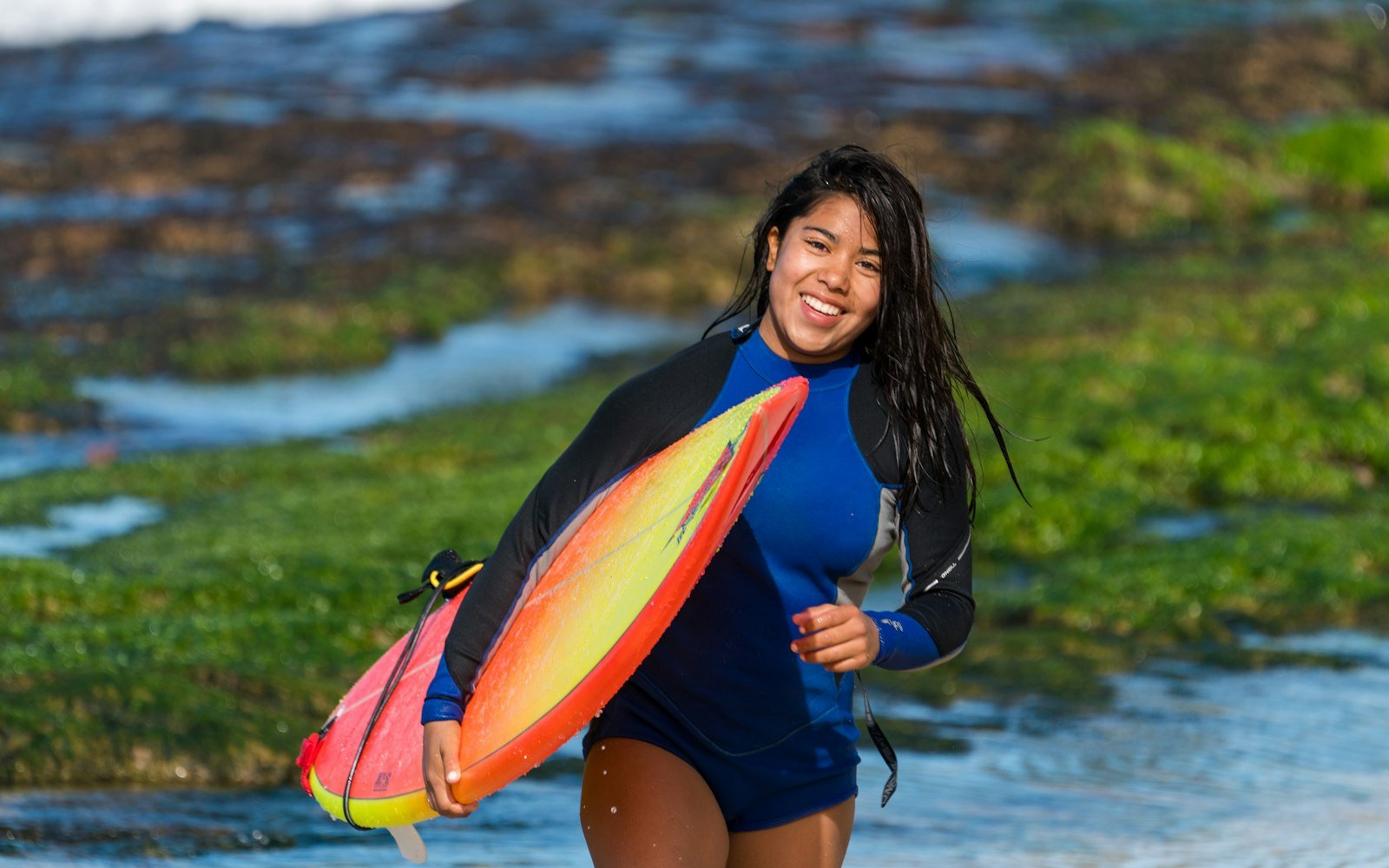
A rash guard is one of the most practical pieces of swimwear you can own. It keeps the sun off your shoulders and back, stops a surfboard or paddleboard from rubbing your skin, and lets you spend long hours in the water without constantly worrying about reapplying sunscreen to hard-to-reach spots.
But rash guards vary a lot. Some are skin-tight and built for surfing, others are loose and relaxed for beach days. Fabrics, sleeve lengths and necklines all differ, and then there is the UPF label to decode. This guide explains what to look for so you can pick one that suits how you actually spend time in the water.
Quick takeaways
- A rash guard is a stretchy, quick-drying top worn in the water for sun coverage and protection from chafing.
- Fit depends on activity: snug for surfing and paddling, looser for relaxed swimming and beach days.
- UPF is a fabric rating for how much UV radiation passes through the fabric; a higher number means more protection.
- Long sleeves give the most coverage; short sleeves and sleeveless styles are cooler but cover less.
- Rash guards complement sunscreen rather than replace it: you still need it on exposed skin.
What is a rash guard?
A rash guard is a fitted or semi-fitted top made from stretchy swim fabric, usually a blend of nylon or polyester with elastane. It started out in surfing, where it protected surfers from board rash, the irritation caused by skin rubbing against a waxed board. Today rash guards are worn for everything from snorkelling and paddleboarding to playing in the shallows with kids.
They are also called rash vests, surf tops or swim shirts, depending on where you are and how they are cut. A “swim shirt” usually means a looser, more T-shirt-like fit, while a “rash guard” or “rash vest” tends to be closer-fitting.
Understanding UPF
UPF stands for Ultraviolet Protection Factor. It is a rating for fabrics that indicates how much of the sun’s UV radiation can pass through the fabric to reach your skin. The higher the number, the less UV gets through. Think of it as the fabric equivalent of the protection factor on sunscreen, though the two are measured differently and are not directly interchangeable.
A few things to keep in mind:
- UPF applies only to the skin the fabric covers. Your face, hands, neck and any uncovered areas still need sunscreen.
- Fabric that is stretched very tight or becomes worn and thin over time may let more UV through.
- Colour and weave affect protection: denser fabrics and darker or brighter colours generally block more UV than thin, loosely woven, pale fabrics.
- Labelling standards vary between countries, so look for a UPF rating that is clearly stated by the manufacturer.
If you spend a lot of time in the sun, a rash guard with a stated UPF rating is a straightforward way to add a reliable layer of coverage. Keep up the usual sun-safety habits too: sunscreen on exposed skin, reapplied regularly, plus shade and a hat when you are out of the water.
Choosing the right fit
Snug fit for surfing and paddling
If you surf, bodyboard, paddleboard or swim laps, a close fit is best. A snug rash guard will not balloon with water, flap in the wind or ride up when you paddle. It also protects against chafing better because there is no loose fabric to rub. It should feel close but not restrictive: you should be able to lift your arms overhead and rotate your shoulders comfortably.
Relaxed fit for beach days
For splashing about, snorkelling or long days at the beach, a looser swim shirt can feel more comfortable and easier to get on and off. Many people prefer it out of the water, too, because it sits more like a T-shirt. The trade-off is that loose fabric can drag in the water and may lift with waves.
Length and coverage
Look at where the hem sits. A longer hem stays tucked into bottoms or over the waistband during movement, while a cropped style pairs nicely with high-waisted bikini bottoms. If you want your rash guard to stay put during active sessions, some styles have a gripper hem or a longer back.
For more on swimwear built for movement, our guide to swimwear for surfing, laps and beach sports covers bottoms and one-pieces that stay in place.
Pro tip: Try a rash guard on dry and then imagine it wet: swim fabric clings more when wet and can feel tighter. If a snug fit already feels restrictive when dry, size up.
Sleeve length and necklines
| Style | Best for | Trade-off |
|---|---|---|
| Long sleeve | Maximum sun coverage, surfing, long days in the water | Warmer in very hot weather |
| Short sleeve | Swimming, snorkelling, general beach use | Forearms need sunscreen |
| Sleeveless or cap sleeve | Hot weather, active swimming | Shoulders and arms exposed |
| Cropped | Pairs with bikini bottoms, stylish beach look | Less coverage at the midriff |
Necklines vary too. A crew neck is simple and easy to wear. A high neck or mock neck covers more of the neck and chest, which can be useful for sun coverage. Half-zip and full-zip styles make the rash guard easier to get on and off when wet and let you adjust ventilation.
Fabric: what to look for
Most rash guards are made from nylon or polyester blended with elastane for stretch.
- Nylon blends feel soft and smooth and have a supple stretch.
- Polyester blends tend to hold up well to chlorine and sun, which makes them a good choice if you swim in pools often.
- Recycled fabrics are increasingly common and perform similarly to their conventional counterparts.
Look for flat seams, which reduce rubbing, and a fabric that feels substantial rather than thin. Our swimwear fabrics guide explains these fibres in more detail, and our guide to sustainable swimwear covers recycled options.
What to wear with a rash guard
A rash guard works with almost any swim bottoms. For active sessions, choose bottoms that stay secure: a fuller or high-waisted cut, or swim shorts or leggings for extra coverage. For relaxed beach days, any bikini bottom works. Our guide to bikini bottom cuts can help you choose.
Some people wear a bikini top or sports-style swim top underneath for extra support, especially for larger busts. Others prefer rash guards with a built-in shelf bra.
Caring for your rash guard
Rash guards take a lot of sun, salt and chlorine, so a little care keeps them performing:
- Rinse in cool fresh water after every use.
- Hand wash or use a gentle cycle with a mild detergent, following the care label.
- Avoid fabric softener, which can affect the fabric’s performance.
- Dry in the shade rather than in direct sun or a tumble dryer.
- Replace your rash guard when the fabric becomes thin, stretched or loses its shape, since worn fabric may protect less.
What to look for when you shop
- A clearly stated UPF rating from the manufacturer.
- A fit that matches your activity: snug for surfing and paddling, relaxed for beach days.
- Sleeve length that suits your sun exposure and climate.
- Flat seams and a smooth finish to reduce chafing.
- Chlorine-resistant fabric if you swim in pools often.
- A hem length that stays in place when you move.
- A neckline or zip that makes it easy to get on and off when wet.
FAQ
What does UPF mean on a rash guard?
UPF stands for Ultraviolet Protection Factor. It is a fabric rating that shows how much UV radiation passes through the fabric. The higher the number, the more UV the fabric blocks. It only protects skin the fabric covers.
Should a rash guard be tight or loose?
It depends on your activity. For surfing, paddling and lap swimming, a snug fit stays in place and prevents chafing. For relaxed beach days, a looser swim shirt can be more comfortable.
Do I still need sunscreen with a rash guard?
Yes, on any skin the rash guard does not cover, such as your face, neck, hands and legs. Reapply regularly, especially after swimming and towelling off.
Can I wear a rash guard in a swimming pool?
Yes. Rash guards are fine in pools and many people wear them for sun coverage outdoors. If you swim in chlorinated water often, choose a chlorine-resistant fabric and rinse it after every use.
A good rash guard is a simple way to spend more time in the water comfortably. Pick a fit that suits your activity, check the UPF rating and fabric, pair it with secure bottoms, and you will be ready for long sessions in the sun.